3 nights / 4 days
Pilgrimage
₹37,000
Starting From


Senior Citizen Kashi Ayodhya Yatra
Varanasi, Prayagraj & Ayodhya (Elders)|Pilgrimage
One City A Day Pace
Lift-Access Rooms
Daily Family WhatsApp
A complete 40-year guide to Sarnath near Varanasi, where the Buddha gave his first sermon, detailing the Dhamek Stupa, Ashoka Pillar, museum, and international temples.
Drop your details and we'll craft a personalized spiritual package.
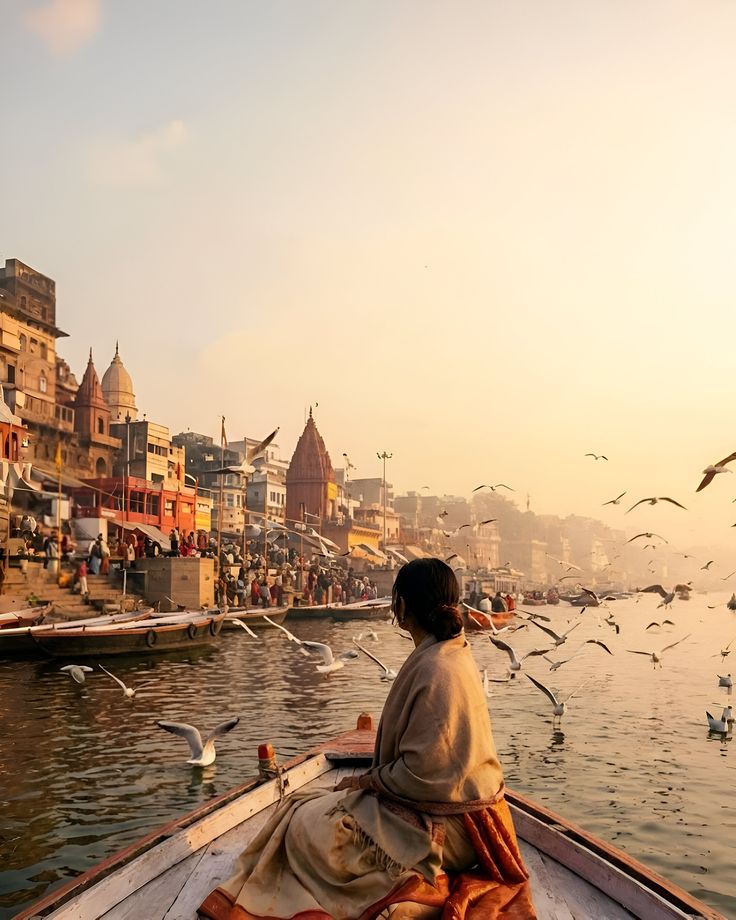
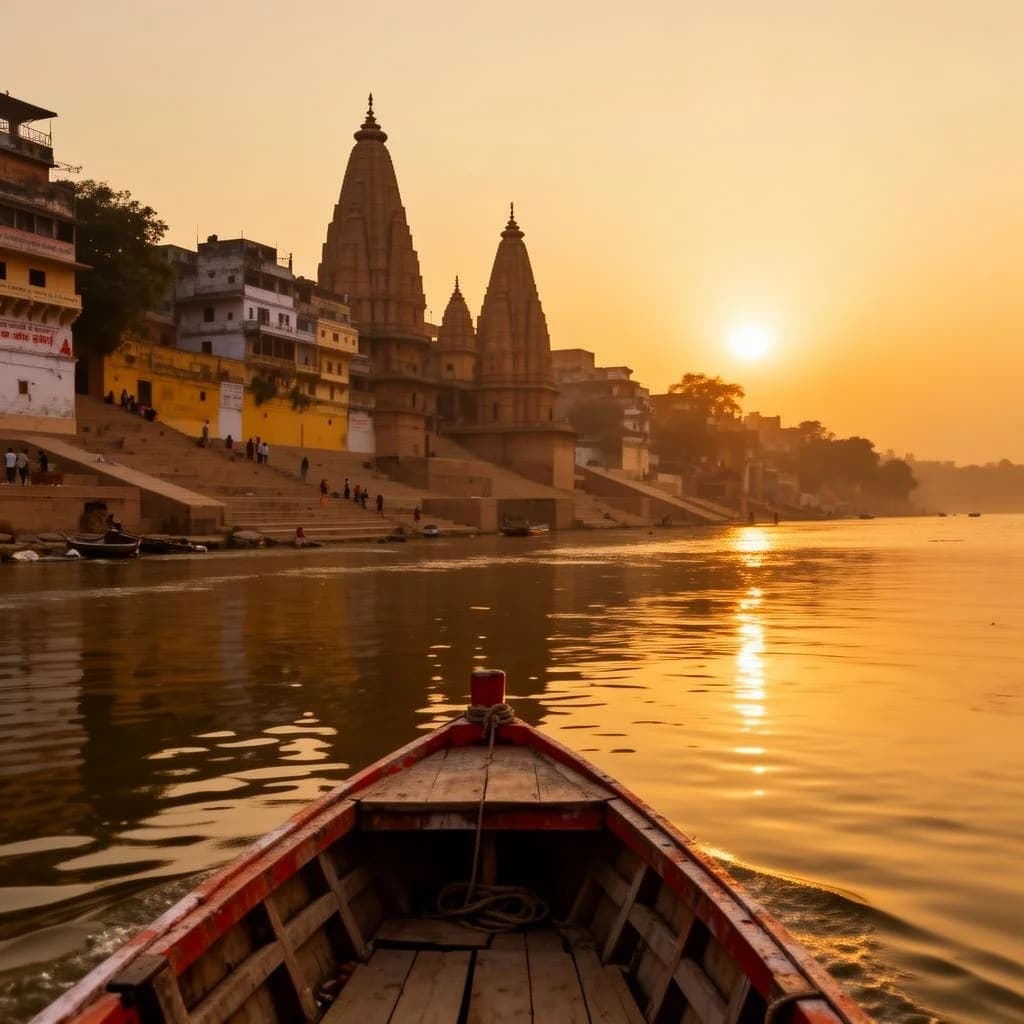
The Kashi Vishwanath Temple, the Dashashwamedh Ganga Aarti, a sunrise boat ride past the 80-plus ghats, and Sarnath, where the Buddha gave his first sermon
Sarnath, a town about 10 to 13 km northeast of Varanasi, is one of the most sacred places in the Buddhist world. Known in ancient times as the Deer Park, Mrigadava or Isipatana, it is where the Buddha delivered his first sermon after his enlightenment, and where the first community of his followers, the Sangha, was formed. Today it is a serene expanse of ancient ruins, towering stupas, a renowned museum, modern temples built by Buddhist communities from across Asia, and a deer park, all within an easy radius. It is a place of profound calm and historical depth, a complete contrast to the intensity of the Varanasi ghats.
After attaining enlightenment at Bodh Gaya, the Buddha walked to the Deer Park at Sarnath, where he found the five ascetics who had earlier been his companions: Kaundinya, Assaji, Bhaddiya, Vappa and Mahanama. To them he gave his first teaching, known as the Dhammacakkappavattana, the “Setting in Motion of the Wheel of Dharma,” in which he expounded the Four Noble Truths and the Noble Eightfold Path. This sermon marked the First Turning of the Wheel of Dharma and the founding of the Buddhist Sangha, the monastic community. For this reason Sarnath is often called the birthplace of Buddhism as an organised religion, the place where the Buddha's teaching first went out into the world.
The holiest sites named by the Buddha
Buddhism flourished at Sarnath from around the 6th to 2nd centuries BCE, supported by the kings and wealthy merchants of Varanasi. In the 3rd century BCE, the emperor Ashoka, a great patron of Buddhism, raised stupas, monasteries and the famous pillar here. The Chinese pilgrim-monks Faxian, in the early 5th century, and Xuanzang, around 640 CE, described a thriving centre of monasteries and monks. Sarnath saw further building through the Gupta period, renowned for its art, and into the Pala period, with the Dharmachakra Jina Vihar built or restored by Queen Kumaradevi in the 12th century. The site was devastated by invasion around 1194 CE and fell into ruin, lying neglected until archaeological excavations from the late 18th century onward, and the efforts of the Maha Bodhi Society in the 20th century, restored its prominence.
The Dhamek Stupa is the great landmark of Sarnath, a massive cylindrical tower of brick and stone marking the spot where the Buddha is believed to have given his first sermon. It stands about 43.6 metres tall, roughly 128 feet, with a diameter of around 28 metres. An original Ashokan stupa stood here from the 3rd century BCE, while the present structure is generally dated to about 500 CE, the Gupta period, having been enlarged several times, with its upper part left unfinished. Its lower portion is faced with carved stone bearing exquisite floral and geometric patterns, human and bird figures, and Brahmi inscriptions. It is one of the most important and impressive Buddhist monuments in India.
Near the stupa stand the remains of the Ashoka Pillar, erected by the emperor Ashoka around 250 BCE and inscribed with an edict. The pillar was broken during the invasions of the 12th century, and its lower portions remain at the original spot. It was once crowned by the magnificent Lion Capital of Ashoka, four lions seated back to back atop a drum carved with a frieze and a 32-spoke wheel of dharma. The Lion Capital is now preserved in the Sarnath Archaeological Museum, and it is the National Emblem of India, while the wheel of dharma, the Ashok Chakra, appears on the national flag. Few objects anywhere carry such historical and national weight.
The Sarnath Archaeological Museum, established following a decision in 1904, is the oldest site museum of the Archaeological Survey of India. Its greatest treasure is the original Lion Capital of Ashoka, the National Emblem of India, which survived the fall from the top of the pillar. The museum also holds the celebrated 5th-century Gupta-era sculpture of the Buddha preaching his first sermon, the Dharmachakra Pravartana mudra image, considered a masterpiece of Indian art, along with a vast collection of Buddhist sculptures and antiquities spanning from the 3rd century BCE to the 12th century CE. The museum is generally open from late morning to 5 PM and is closed on Fridays.
The Mulagandha Kuti Vihara is the principal modern temple at Sarnath, built in 1931 by the Maha Bodhi Society, founded by Anagarika Dharmapala, near the site where the Buddha is believed to have stayed during his time here. Its interior walls are adorned with renowned frescoes by the Japanese artist Kosetsu Nosu, depicting the life of the Buddha, and it enshrines bone relics of the Buddha. Outside stands a sapling of the original Bodhi Tree, brought from Bodh Gaya and planted in 1931, now grown to fill the courtyard. Evening prayers and chanting here are a moving experience. It is a serene and living place of worship amid the ancient ruins.
The Chaukhandi Stupa stands a little apart from the main complex, about 800 metres away, marking the spot where the Buddha reunited with his first five disciples as he arrived from Bodh Gaya. Originally a terraced temple of the Gupta period, it is distinctively capped with an octagonal brick tower, built by the Mughal emperor Akbar in 1588 to commemorate his father Humayun's visit, a rare meeting of Buddhist and Mughal heritage. Elsewhere across the site lie the foundations of the Dharmarajika Stupa, one of the oldest at Sarnath, and the extensive remains of monasteries, votive stupas and shrines, among the most expansive Buddhist ruins in India.
The Deer Park, the ancient Mrigadava, is the historical grove where the first sermon was given, and a small modern deer park keeps deer roaming in homage to the name and the old legend that the Buddha was once born as the King of the Deer. Around the site, Buddhist communities from across Asia have built their own temples and monasteries, including Thai, Tibetan, Sri Lankan, Japanese, Chinese, Korean and Myanmarese temples, each in its national style, with the Thai temple's tall standing Buddha statue among the modern landmarks. Together they make Sarnath a living, international centre of Buddhism as well as an ancient one.
Sarnath visiting details
Sarnath is about 10 to 13 km northeast of central Varanasi, roughly 30 to 40 minutes by road. A taxi costs in the region of ₹300 to ₹500, an auto-rickshaw somewhat less, and local buses also run. It is well connected from the city, the railway stations and the airport. Most of the key sites lie within a walkable radius of one to two km, so once there you can explore comfortably on foot. See how to reach Varanasi for getting to the city itself.
Sarnath is a key stop on the Buddhist circuit that traces the life of the Buddha. Many pilgrims combine it with Bodh Gaya, the place of his enlightenment, about 250 km away in Bihar, and with Kushinagar, the place of his passing, along with Lumbini in Nepal, his birthplace. From Varanasi, Sarnath pairs naturally with onward travel to Bodh Gaya, just as the city itself sits on the pilgrimage route linking Varanasi, Prayagraj and Ayodhya. We arrange the full Buddhist circuit and combined itineraries; see our tours from Varanasi and packages.
We are Experience My India, rated 4.5 stars on TripAdvisor and Google, with 50,000+ guests served since 2018. We arrange Sarnath as a calm half-day from Varanasi, with a car, a knowledgeable guide who explains the first sermon, the monuments and the symbolism, and the museum timed so you do not arrive on a Friday. We also build the wider Buddhist circuit to Bodh Gaya and beyond. For South Indian pilgrims, everything is in Telugu or Kannada. See our Varanasi packages or message Rajeev's team on WhatsApp at +91 7302265809. Plan your days with our Varanasi itinerary.
Curated itineraries featuring this divine destination.






Grouped for quick scanning
Everything you need to know about Sarnath.
Topic 01
10 questions
Sarnath is a town about 10 km northeast of Varanasi where the Buddha gave his first sermon after attaining enlightenment at Bodh Gaya. It is one of the four holiest sites in Buddhism, home to the Dhamek Stupa, the Ashoka Pillar, a renowned archaeological museum and the Mulagandha Kuti Vihara, set among extensive ancient ruins. It is considered the place where Buddhism began as an organised religion.
Sarnath is important because it is where the Buddha first taught after his enlightenment, setting in motion the Wheel of Dharma and founding the Sangha, the Buddhist community. It is one of the four great Buddhist pilgrimage sites named by the Buddha himself. It is also home to the Ashoka Pillar, whose Lion Capital is India's national emblem, giving it national as well as spiritual significance.
At Sarnath, the Buddha, having attained enlightenment at Bodh Gaya, delivered his first sermon to his five former companions in the Deer Park. In this teaching, the Dhammacakkappavattana, he expounded the Four Noble Truths and the Noble Eightfold Path, and founded the first Buddhist Sangha. This event, the First Turning of the Wheel of Dharma, marks the beginning of the Buddha's teaching and of Buddhism as a community.
The Buddha's first sermon is known as the Dhammacakkappavattana Sutta, the "Setting in Motion of the Wheel of Dharma." In it, he taught the Four Noble Truths, the nature of suffering and the path beyond it, and the Noble Eightfold Path. Delivered at Sarnath to his five disciples, it was the first teaching of his career and the foundation of all Buddhist doctrine that followed.
The Dhammacakkappavattana, or "Setting in Motion of the Wheel of Dharma," is the name of the Buddha's first sermon, given at Sarnath. It introduced the central teachings of Buddhism: the Four Noble Truths and the Noble Eightfold Path. The "turning of the wheel" is a metaphor for the Buddha beginning to teach, and the wheel of dharma became one of Buddhism's most important symbols.
The Buddha's first five disciples were the ascetics Kaundinya (Kondanna), Assaji, Bhaddiya, Vappa and Mahanama, who had earlier been his companions in his years of severe asceticism. They received his first sermon at Sarnath and became the first members of the Sangha. Their reunion with the Buddha is commemorated at the nearby Chaukhandi Stupa, where he is said to have met them on arriving from Bodh Gaya.
The Four Noble Truths are the heart of the Buddha's teaching: that life involves suffering, that suffering has a cause, that it can cease, and that there is a path to its cessation. That path is the Noble Eightfold Path, a guide to ethical living, mental discipline and wisdom. Both were first taught by the Buddha at Sarnath, in his first sermon, making the site the source of Buddhist doctrine.
Yes, Sarnath is where the Buddha founded the Sangha, the community of his followers, when his first five disciples accepted his teaching and joined him. This founding of the monastic community is why Sarnath is often called the birthplace of Buddhism as an organised religion. The first sermon and the first Sangha together make Sarnath one of the most significant sites in Buddhist history.
The Deer Park, known in ancient texts as Mrigadava or Isipatana, is the historical grove where the Buddha gave his first sermon. Today it survives as maintained parkland among the ruins, with a small modern deer park where deer roam, honouring the ancient name. By legend, the Buddha was once born as the King of the Deer here, which adds to the significance of the deer in the site's story.
Sarnath has been known by several names, including Deer Park, Mrigadava and Migadaya (Deer Park), Isipatana and Rishipattana (place of the sages or fallen sages), and Sarangnath. The name Sarnath is thought to derive from Saranganatha, "Lord of the Deer," a form linked to Shiva, reflecting the area's deer and its layered history. The Deer Park name connects directly to the site of the first sermon.
Topic 02
5 questions
Yes, Sarnath is one of the four holiest sites in Buddhism, named by the Buddha himself before his passing as places his followers should visit. The four are Lumbini, his birthplace, Bodh Gaya, his enlightenment, Sarnath, his first sermon, and Kushinagar, his passing. Sarnath's place among them, as the site of the first teaching, makes it a major destination for Buddhist pilgrims worldwide.
The four main Buddhist pilgrimage sites, named by the Buddha, are Lumbini in Nepal (his birth), Bodh Gaya in Bihar (his enlightenment), Sarnath near Varanasi (his first sermon), and Kushinagar in Uttar Pradesh (his Mahaparinirvana, or passing). Together they trace the key events of the Buddha's life, and pilgrims travel the circuit between them. Sarnath, accessible from Varanasi, is among the most visited.
The Buddhist circuit is the pilgrimage route linking the sites associated with the Buddha's life, principally Lumbini, Bodh Gaya, Sarnath and Kushinagar, along with other sites such as Nalanda and Vaishali. Pilgrims and travellers journey between them to follow the Buddha's life and teaching. Sarnath, near Varanasi, is a key stop, and Varanasi is a natural base from which to begin or continue the circuit.
Bodh Gaya, the place of the Buddha's enlightenment, is about 250 km from Sarnath, in the state of Bihar, typically a several-hour journey by road or rail. The two are closely linked in the Buddha's story, as he walked from Bodh Gaya to Sarnath to give his first sermon. Many pilgrims combine them on the Buddhist circuit, which we can arrange from Varanasi.
Yes, Sarnath pairs naturally with Bodh Gaya, the enlightenment site, and with Kushinagar, the site of the Buddha's passing, and can be extended to Lumbini in Nepal, the birthplace. From Varanasi, we arrange Sarnath as a half-day and build onward Buddhist-circuit itineraries to Bodh Gaya and beyond. It is one of the great pilgrimage journeys, and Varanasi is an ideal base from which to undertake it.
Topic 03
6 questions
Ashoka was the great Mauryan emperor of the 3rd century BCE who, after embracing Buddhism, became its foremost patron, spreading the Buddha's teaching across his empire. At Sarnath he raised stupas, monasteries and the famous Ashoka Pillar, crowned by the Lion Capital that is now India's national emblem. His patronage made Sarnath a major centre of Buddhism, and much of its early grandeur dates to his reign.
The Ashoka Pillar is a stone column erected by Emperor Ashoka around 250 BCE, inscribed with an edict, that once stood crowned by the Lion Capital. It was broken during the invasions of the 12th century, and its lower remains stand at the original site. The Lion Capital that topped it, now in the museum, is the National Emblem of India, making the pillar one of the most historically significant monuments in the country.
Yes, the Chinese pilgrim-monks Faxian, in the early 5th century, and Xuanzang, around 640 CE, both visited Sarnath and described it in their accounts. Xuanzang reported a thriving centre with around 1,500 monks and a vihara some 60 metres tall. Their writings are valuable records of Sarnath at the height of its monastic life, and confirm its importance as a centre of Buddhist learning.
Sarnath declined after it was devastated by an invading army around 1194 CE, when its monasteries and monuments were destroyed and the site fell into neglect. For centuries it lay in ruin, its history largely forgotten, until archaeological excavations from the late 18th century onward and the efforts of the Maha Bodhi Society in the 20th century brought it back to prominence as a place of pilgrimage and heritage.
Sarnath was revived through archaeological excavations from the late 18th and 19th centuries, which uncovered its monuments and the Lion Capital, and through the efforts of the Maha Bodhi Society, founded by Anagarika Dharmapala, in the 20th century. The Society built the Mulagandha Kuti Vihara in 1931 and helped restore Sarnath as a living centre of Buddhism, drawing pilgrims once again from across the world.
The Maha Bodhi Society, founded by the Sri Lankan Buddhist leader Anagarika Dharmapala, played a central role in reviving Sarnath in the 20th century, building the Mulagandha Kuti Vihara in 1931 and maintaining a temple and park around it. It helped re-establish Sarnath as an active place of Buddhist worship and pilgrimage, complementing the ancient ruins with a living religious presence. Its work was key to the site's modern revival.
Topic 04
9 questions
The Dhamek Stupa is the great landmark of Sarnath, a massive cylindrical stupa of brick and stone marking the spot where the Buddha gave his first sermon. It stands about 43.6 metres tall with a diameter of around 28 metres. Its lower part bears exquisite carved patterns and Brahmi inscriptions. It is one of the most important and impressive Buddhist monuments in India, and the centrepiece of any visit to Sarnath.
The Dhamek Stupa stands about 43.6 metres, roughly 128 feet, tall, with a diameter of around 28 metres. An original stupa was raised here by Emperor Ashoka in the 3rd century BCE, while the present structure is generally dated to about 500 CE, in the Gupta period, having been enlarged several times. Its upper portion was left unfinished. It marks the precise spot associated with the Buddha's first sermon.
The Lion Capital of Ashoka is the sculpture of four lions seated back to back that once crowned the Ashoka Pillar at Sarnath, above a frieze and a wheel of dharma. Carved from polished sandstone in the 3rd century BCE, it is now preserved in the Sarnath Archaeological Museum and serves as the National Emblem of India. The wheel beneath it, the Ashok Chakra, appears on the Indian national flag.
Sarnath is connected to India's national emblem because the Lion Capital of Ashoka, which crowned the Ashoka Pillar here, was adopted as the State Emblem of India after independence. The 32-spoke wheel of dharma associated with it became the Ashok Chakra on the national flag. So one of the nation's central symbols comes directly from this ancient Buddhist site, giving Sarnath deep national significance.
The Sarnath Archaeological Museum, the oldest site museum of the Archaeological Survey of India, holds the original Lion Capital of Ashoka, India's national emblem, and the celebrated 5th-century Gupta sculpture of the Buddha preaching his first sermon, among a vast collection of Buddhist sculptures and antiquities from the 3rd century BCE to the 12th century CE. It is a must-visit, though it is closed on Fridays.
The museum's celebrated sculpture is the 5th-century Gupta-era image of the Seated Buddha preaching his first sermon, shown in the Dharmachakra Pravartana mudra, the gesture of turning the wheel of dharma. Regarded as a masterpiece of Indian art for its serenity and refinement, it depicts the very event that makes Sarnath sacred. Along with the Lion Capital, it is one of the museum's two greatest treasures.
The Mulagandha Kuti Vihara is the principal modern temple at Sarnath, built in 1931 by the Maha Bodhi Society near the site where the Buddha is believed to have stayed. Its walls bear renowned frescoes of the Buddha's life by the Japanese artist Kosetsu Nosu, and it enshrines bone relics of the Buddha. A sapling of the Bodh Gaya Bodhi Tree, planted outside in 1931, has grown large. Evening chanting here is deeply moving.
The Chaukhandi Stupa, about 800 metres from the main complex, marks the spot where the Buddha reunited with his first five disciples as he arrived from Bodh Gaya. Originally a Gupta-period terraced temple, it is capped by an octagonal brick tower built by the Mughal emperor Akbar in 1588 to commemorate his father Humayun's visit. This rare blend of Buddhist and Mughal heritage makes it a distinctive and historically layered monument.
The Dharmarajika Stupa is one of the oldest stupas at Sarnath, raised in the Mauryan period to enshrine relics of the Buddha, of which today only the foundations remain after centuries of damage and excavation. It is part of the extensive ruins at the heart of the site. Though little of it survives above ground, it is significant as one of the earliest Buddhist monuments at Sarnath.
Topic 05
8 questions
Yes, a small modern deer park at Sarnath keeps deer roaming freely, in homage to the site's ancient name, Mrigadava or Deer Park, and to the legend that the Buddha was once born as the King of the Deer here. It is a gentle, family-friendly part of a visit, and a living link to the grove where the Buddha gave his first sermon over two and a half thousand years ago.
Buddhist communities from across Asia have built temples and monasteries at Sarnath, including Thai, Tibetan, Sri Lankan, Japanese, Chinese, Korean and Myanmarese temples, each in its own national style, with prayer wheels, gardens and statues. The Thai temple is known for its tall standing Buddha statue. These make Sarnath a living, international centre of Buddhism, where you can experience the traditions of many Buddhist countries in one place.
Yes, an evening light and sound show at the Dhamek Stupa tells the story of the Buddha's life, illuminating the ancient monument. Narrated by a celebrated Indian film actor, it weaves the Buddha's story with the heritage of the region. Tickets are bought at the site entrance. If your visit allows, staying for the evening show adds an atmospheric and memorable end to a day at Sarnath.
The archaeological site, including the Dhamek Stupa and the ruins, is generally open daily from about 6 AM to 6 PM, while the Sarnath Archaeological Museum is open from around 10 AM to 5 PM and is closed on Fridays. Timings can vary seasonally, so confirm before you go. Plan to see the museum on a day other than Friday, and allow a relaxed half-day for the whole site.
Yes, the Sarnath Archaeological Museum, like many Archaeological Survey of India museums, is closed on Fridays. If seeing the Lion Capital and the first-sermon Buddha sculpture is a priority, and it should be, plan your visit for any day except Friday. The archaeological site and stupas remain open daily, so a Friday visit can still take in the monuments, just not the museum.
The Archaeological Survey of India charges a modest entry fee for the main site, with a separate fee for the museum, and combo tickets are available that can save money. Fees differ for Indian and foreign visitors, as at other ASI monuments. Carry some cash, and ask about a combo ticket at the entrance. The light and sound show has its own ticket, bought at the gate.
Allow about 3 to 4 hours, or a relaxed half-day, to take in the Dhamek Stupa, the Ashoka Pillar, the museum, the Mulagandha Kuti Vihara and the Deer Park, with most sites within an easy walk. If you wish to see the Chaukhandi Stupa and several of the international temples, or stay for the evening light and sound show, allow longer. A morning visit is ideal.
Yes, photography is generally allowed across the open archaeological site and the stupas, and early morning light is beautiful for it. Inside the museum, however, photography is usually not permitted, to protect the antiquities, and you should follow the posted rules and any guidance at the temples. Be respectful when photographing worshippers and ceremonies at the active temples.
Topic 06
8 questions
Sarnath is about 10 to 13 km northeast of central Varanasi, in Uttar Pradesh. It is easily reached by road in around 30 to 40 minutes, and is well connected from the city, the railway stations and the Varanasi airport. Its setting, a calm expanse of parkland and ruins away from the city, is part of its appeal, offering a peaceful contrast to the bustle of the ghats.
Sarnath is roughly 10 to 13 km from central Varanasi, about a 30 to 40 minute drive depending on traffic. This makes it an easy half-day trip from the city, and a natural addition to a Varanasi itinerary. Its closeness to the city, combined with its great spiritual and historical importance, makes it one of the most rewarding short excursions from Varanasi.
You can reach Sarnath by taxi, costing around ₹300 to ₹500, by auto-rickshaw for somewhat less, or by local bus. The drive takes about 30 to 40 minutes. A taxi or a guided tour is the most comfortable option, especially if you wish to see the museum and the monuments without rushing. We arrange a car and guide for a relaxed half-day visit from the city.
Yes, a popular plan is a Varanasi sunrise boat ride, then Sarnath in the mid to late morning, returning to the city for the afternoon and the evening Ganga Aarti at Dashashwamedh. Sarnath's closeness, about 10 km, makes this comfortable. We sequence such a day so you experience both the riverfront and Sarnath without rushing, with the museum timed to avoid a Friday.
Yes, most of the key sites at Sarnath, the Dhamek Stupa, the Ashoka Pillar, the ruins, the museum and the Mulagandha Kuti Vihara, lie within an easy walking radius of one to two km, on level ground. The Chaukhandi Stupa is a little further, about 800 metres from the main complex. Comfortable shoes are worth wearing, but the site is pleasant and easy to explore on foot.
Not at all. While Sarnath is one of Buddhism's holiest sites and draws pilgrims worldwide, it welcomes everyone: history lovers, art lovers and travellers of every faith. Its serene atmosphere, its great monuments and its national significance through the Lion Capital make it rewarding for all. Visitors of any background find it a peaceful and deeply interesting place, quite different from the city's Hindu shrines.
There is no strict dress code for the open archaeological site, though modest, comfortable clothing is sensible. At the active Buddhist temples, such as the Mulagandha Kuti Vihara, dress modestly and remove your shoes before entering, and maintain a quiet, respectful manner during prayers. As you will be walking and possibly visiting temples, comfortable shoes that are easy to remove are the practical choice.
Yes. We arrange Sarnath as a calm half-day from Varanasi, with a car and a knowledgeable guide who explains the first sermon, the monuments, the museum and the symbolism, and times the museum to avoid Fridays. We also build the wider Buddhist circuit to Bodh Gaya and beyond. For South Indian pilgrims, everything is in Telugu or Kannada. Message us on WhatsApp at +91 7302265809.
Topic 07
7 questions
Early to mid-morning is ideal: the light is beautiful for the stupas, the temperatures are cooler, and the crowds are thinner. A morning visit also leaves the museum comfortably within its opening hours and lets you return to Varanasi for the afternoon and the evening Ganga Aarti. If you wish to see the evening light and sound show, you can instead plan a later-afternoon visit ending at the stupa.
October to March is the best season, when Varanasi and Sarnath enjoy cool, pleasant weather ideal for walking the open site and ruins. The summer months can be very hot, and the monsoon brings rain. Winter mornings can be misty and atmospheric at the stupas. Planning your visit in the cooler months makes the half-day on foot far more comfortable.
Yes, Sarnath is excellent for families. The open parkland and level paths are easy with children, the deer park is a gentle delight, and the great stupa and museum offer an accessible history lesson. It is calm and spacious, unlike the crowded ghats and lanes, making it relaxed for all ages. A guide can tell the Buddha's story in a way that engages children.
After his enlightenment at Bodh Gaya, the Buddha sought out his five former companions, who were staying at the Deer Park at Sarnath, to share his realisation, and so chose this grove for his first teaching. The Lalitavistara describes him choosing the Deer Park near Varanasi for this purpose. The site's peace, and the presence of those first disciples, made it the place where his teaching began.
Yes, though Sarnath is above all a Buddhist site, it has connections to Jainism too: a Jain temple, dedicated to the eleventh Tirthankara, stands very close to the Dhamek Stupa, as Sarnath is associated in Jain tradition with that Tirthankara. Hindu images have also been found at the site. This reflects the layered religious history of the area over many centuries, though its Buddhist significance is foremost.
Yes, the town of Sarnath and the area around the site have several eateries and stalls offering refreshments and meals, and Varanasi, a short drive away, has many more options. On a half-day visit, many travellers simply carry water and a snack and dine back in the city. A guide can point you to clean, reliable places to eat near the site if you wish.
That it is one of the four holiest Buddhist sites and an easy, rewarding half-day from Varanasi, rich in history and serene in atmosphere. While it is a Buddhist rather than a Hindu site, its national significance, through the Lion Capital that is India's emblem, and its great stupas make it interesting for all. A guide who explains it in Telugu or Kannada deepens the visit, which we arrange.
Still have a question?
Message Rajeev on WhatsApp