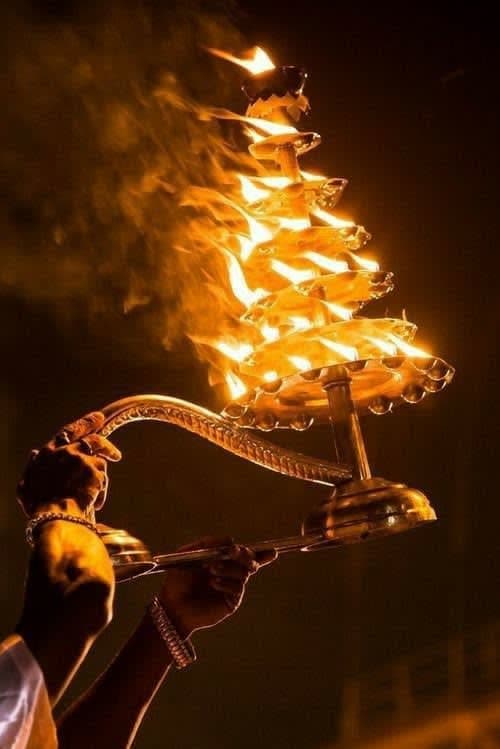
3 nights / 4 days
Pilgrimage
₹37,000
Starting From


Senior Citizen Kashi Ayodhya Yatra
Varanasi, Prayagraj & Ayodhya (Elders)|Pilgrimage
One City A Day Pace
Lift-Access Rooms
Daily Family WhatsApp
A 40-year guide to Tulsi Manas Mandir, Ayodhya's sister temple in Varanasi, the believed site of Ramcharitmanas composition, with puppet displays and timings.
Drop your details and we'll craft a personalized spiritual package.
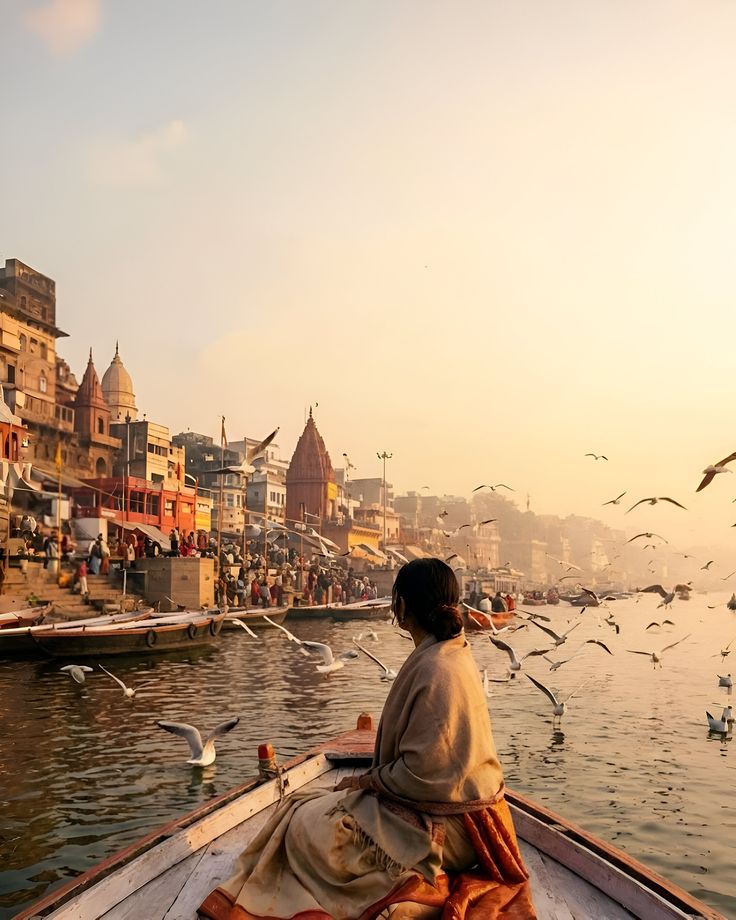
The Kashi Vishwanath Temple, the Dashashwamedh Ganga Aarti, a sunrise boat ride past the 80-plus ghats, and Sarnath, where the Buddha gave his first sermon
Tulsi Manas Mandir, also called Sri Satyanarayana Tulsi Manas Mandir, is one of Varanasi's most distinctive temples, dedicated to Lord Rama and named for the poet-saint Goswami Tulsidas. It stands on the spot where Tulsidas is believed to have composed the Ramcharitmanas, and it is built of white marble, set in landscaped gardens, serene and a little apart from the bustle of the surrounding streets. Its walls inscribed with the epic and its moving puppet tableaux make it unlike any other temple in the city.
Goswami Tulsidas, who lived around 1532 to 1623, was a poet-saint, reformer and philosopher, and one of the most important figures in the Bhakti movement. At or near this spot in the 16th century he composed the Ramcharitmanas, a retelling of the Ramayana in Awadhi, a dialect of Hindi, whose name means “the lake of the deeds of Rama.” The original Ramayana of Valmiki was in Sanskrit, beyond the reach of ordinary people, and by retelling it in the people's language Tulsidas brought the story of Rama to the masses. It is widely held that the Ramcharitmanas did much to establish Rama in popular devotion as the supreme Lord.
While the site is sacred for its link to Tulsidas, the present temple is modern, built in 1964 by the Sureka family, merchants of Howrah and Kolkata in West Bengal, who acquired the garden ground and raised the marble temple here. It was inaugurated by Dr. Sarvepalli Radhakrishnan, the second President of India. Note that this is the Sureka family's temple, not to be confused with the Birla family's New Vishwanath Temple at BHU, another marble temple of the same era nearby.
The temple's signature feature is its walls. The entire Ramcharitmanas, every chaupai, doha, chanda and soratha, is inscribed on the inner marble walls, alongside carved and illustrated scenes from the epic. The whole temple thus becomes a kind of living scripture, where you can read the deeds of Rama as you move through the cool marble halls. For devotees and lovers of the epic alike, walking the walls of Tulsi Manas is a unique and meditative experience, found at no other temple.
In the main hall, the central idols are of Lord Rama with Sita, Lakshman and Hanuman, the heart of Ramcharitmanas devotion. Alongside, the temple holds images of Shiva and Parvati, of Annapurna, and of Lakshmi and Vishnu as Satyanarayana, arranged in the hall. A statue of Goswami Tulsidas himself is part of the temple, and figures by the garden pond depict subjects from the epics, with Shiva and Tulsidas among them. The arrangement reflects the temple's devotion to Rama set within the wider Hindu pantheon.
One of the temple's best-loved features, especially with families and visitors from the surrounding countryside, is its display of mechanically operated puppet tableaux. On an upper level, brightly dressed, three-dimensional animated figures enact scenes from the Ramayana that devotees know by heart, in a small museum-like display for a nominal fee. An upper floor also holds a collection of editions and translations of the Ramayana in many languages. During the month of Saawan (Shravan), roughly July to August, the temple hosts special puppet shows and exhibitions that bring the epic vividly to life.
A well-loved legend tells how, when some scholars of the day disapproved of a sacred epic written in the people's language rather than Sanskrit, the Ramcharitmanas was placed beneath a pile of Sanskrit scriptures in the sanctum of Kashi Vishwanath, and the doors locked, to test its sanctity. By morning, the story goes, the manuscript was found on top of all the others, marked with the words “Satyam Shivam Sundaram.” It is a folk legend rather than documented history, but it captures the reverence in which Tulsidas's work came to be held in Kashi.
Tulsi Manas Mandir offers a rare combination of the spiritual, the literary and the serene. It is a place to pay homage to Rama on the very ground where the Ramcharitmanas was composed, to read the epic on the marble walls, to enjoy the gardens and the charming puppet tableaux, and to find calm away from the crowds. It is at once a temple, a literary monument and a cultural experience, a quiet highlight of southern Varanasi that appeals to devotees, scholars and families alike.
Practical details for your visit
Tulsi Manas Mandir is on Sankat Mochan Road in the Durgakund area of southern Varanasi, right beside Durga Kund, about 250 m away, with Sankat Mochan around 700 m off and BHU about 1.3 km south. It is roughly 6 km from Varanasi Junction and near Assi Ghat. These neighbours are naturally visited together by cab or auto. See how to reach Varanasi.
We are Experience My India, rated 4.5 stars on TripAdvisor and Google, with 50,000+ guests served since 2018. We cluster Tulsi Manas with the adjacent Durga Kund, nearby Sankat Mochan and the BHU temple into a smooth temple morning, with a guide who brings the Tulsidas story and the epic on the walls to life, and for South Indian pilgrims everything in Telugu or Kannada. See our Varanasi packages or message Rajeev's team on WhatsApp at +91 7302265809. Plan your days with our Varanasi itinerary.
Curated itineraries featuring this divine destination.






Grouped for quick scanning
Everything you need to know about Tulsi Manas Mandir.
Topic 01
9 questions
Tulsi Manas Mandir is a white-marble temple in Varanasi dedicated to Lord Rama, built on the spot where the poet-saint Tulsidas is believed to have composed the Ramcharitmanas. Its walls are inscribed with the entire epic, and it is loved for its moving puppet tableaux of the Ramayana. Serene and set in gardens, it is one of the city's most distinctive temples.
It is famous for standing on the very spot where Tulsidas composed the Ramcharitmanas, his Awadhi retelling of the Ramayana, and for having the entire epic inscribed on its marble walls. It is also known for its mechanical puppet tableaux of the Ramayana. This blend of literary heritage, devotion and serene marble architecture makes it unique among Varanasi's temples.
Goswami Tulsidas, who lived around 1532 to 1623, was a poet-saint, reformer and philosopher, and one of the towering figures of the Bhakti movement. He composed the Ramcharitmanas, the Awadhi retelling of the Ramayana, along with works like the Hanuman Chalisa. He is one of the most revered figures in Hindu devotional literature, and Tulsi Manas Mandir honours his legacy.
The Ramcharitmanas is Tulsidas's retelling of the Ramayana in Awadhi, a dialect of Hindi, whose name means "the lake of the deeds of Rama." Composed in the 16th century, it made the story of Rama accessible to ordinary people who could not read the Sanskrit original. It is one of the most beloved and widely recited works of Hindu devotional literature.
By tradition, yes, Tulsi Manas Mandir stands on the spot where Goswami Tulsidas is believed to have composed the Ramcharitmanas in the 16th century, which is the source of the temple's name and significance. While the present building is modern, built in 1964, it marks this sacred and historically associated site. It is one of the most important places linked to Tulsidas in Varanasi.
The Ramcharitmanas brought the Ramayana to the masses by retelling it in the people's language rather than Sanskrit, and it is widely held to have done much to establish Rama in popular devotion as the supreme Lord. Its verses are recited and loved across northern India to this day. It is a landmark of both Hindu devotion and Indian literature.
The Ramcharitmanas is written in Awadhi, a dialect of Hindi spoken in the Awadh region, rather than the Sanskrit of Valmiki's original Ramayana. This choice made the epic accessible to ordinary people who did not read Sanskrit, which is central to its importance. Its verses, in forms like the chaupai and doha, are inscribed on the temple walls.
Ramcharitmanas means "the lake of the deeds of Rama," from "Ram" (Rama), "charit" (deeds) and "manas" (lake, or mind). The title evokes a sacred lake in which devotees may immerse themselves in the story and virtues of Rama. The name reflects the work's devotional purpose, to let people bathe in the life and deeds of the Lord.
The temple is dedicated to Lord Rama, the seventh avatar of Vishnu and the hero of the Ramayana, in keeping with its connection to Tulsidas's Ramcharitmanas. The main idols are of Rama with Sita, Lakshman and Hanuman. The temple also holds images of other deities, but Rama, and the epic of his deeds, are at its heart.
Topic 02
7 questions
The present temple was built in 1964 by the Sureka family, merchants of Howrah and Kolkata in West Bengal, who acquired the garden ground and raised the marble temple on the site associated with Tulsidas. It was inaugurated by Dr. Sarvepalli Radhakrishnan, the second President of India. The site itself is sacred for its much older link to Tulsidas and the Ramcharitmanas.
The present temple was built in 1964 by the Sureka family. So the building is modern, though it stands on a site held sacred since the 16th century, when Tulsidas is believed to have composed the Ramcharitmanas here. The temple marks and honours that historic site in white marble, with the epic inscribed on its walls.
The Sureka family were wealthy merchants of Howrah and Kolkata in West Bengal, who acquired the garden ground at this site and built the marble temple in 1964 as an act of devotion. They are credited with creating this literary and spiritual landmark. The temple is sometimes called Sri Satyanarayana Tulsi Manas Mandir in connection with their dedication.
No. Tulsi Manas Mandir was built by the Sureka family and is dedicated to Rama, on the site where Tulsidas wrote the Ramcharitmanas. The Birla Temple, or New Vishwanath Temple, is a separate marble temple on the BHU campus, built by the Birla family and dedicated to Shiva. Both are marble temples of the same era, but they are distinct.
The temple was inaugurated by Dr. Sarvepalli Radhakrishnan, the philosopher-statesman who served as the second President of India. His inauguration in the 1960s reflects the temple's standing as a significant cultural and religious landmark. It was a fitting honour for a temple that celebrates one of the greatest works of Indian devotional literature.
The building is modern, completed in 1964, but it stands on a site held sacred for centuries as the place where Tulsidas composed the Ramcharitmanas in the 16th century. So while the marble structure is recent, the ground beneath it carries deep historical and devotional significance. It is best understood as a modern temple marking a much older sacred site.
The site is significant because it is held to be where Goswami Tulsidas composed the Ramcharitmanas in the 16th century, one of the most important works of Hindu devotional literature. Building a temple here honoured that sacred association. It is this link to Tulsidas and his epic, rather than the age of the building, that gives Tulsi Manas Mandir its importance.
Topic 03
7 questions
The entire Ramcharitmanas, every chaupai, doha, chanda and soratha, is inscribed on the inner marble walls, alongside carved and illustrated scenes from the epic. This turns the whole temple into a kind of living scripture, where you can read the deeds of Rama as you walk through the halls. It is the temple's most distinctive and beloved feature.
Yes, the complete text of the Ramcharitmanas is inscribed on the temple's inner marble walls, not just selected verses, making the temple a unique place to read the epic in full as you move through it. Accompanying carved scenes illustrate episodes from the story. For devotees and lovers of the epic, this is the temple's great attraction.
Chaupais, dohas, chandas and sorathas are the verse forms in which the Ramcharitmanas is composed, traditional metres of Hindi and Awadhi poetry. The chaupai is a four-line verse and the doha a couplet, among others. These verses, inscribed across the temple's marble walls, are the building blocks of Tulsidas's epic and are recited by devotees across northern India.
The central idols in the main hall are of Lord Rama with Sita, Lakshman and Hanuman, the heart of Ramcharitmanas devotion. The temple also holds images of Shiva and Parvati, of Annapurna, and of Lakshmi and Vishnu as Satyanarayana, arranged in the hall, along with a statue of Tulsidas himself. Rama and his family, however, are at the centre.
Yes, a statue of Goswami Tulsidas, the poet-saint who composed the Ramcharitmanas, is part of the temple, honouring the figure whose work the temple celebrates. Figures by the garden pond also depict subjects from the epics, with Tulsidas among them, shown in the act of composing the Ramayana. These reflect the temple's dedication to his memory and his work.
Alongside the central Rama, Sita, Lakshman and Hanuman, the temple holds images of Shiva and Parvati, of Annapurna, the goddess of nourishment, and of Lakshmi and Vishnu as Satyanarayana. This places the devotion to Rama within the wider Hindu pantheon. The presence of Satyanarayana is reflected in the temple's fuller name, Sri Satyanarayana Tulsi Manas Mandir.
In the temple's garden, figures by a pond depict subjects from the Hindu epics, with Shiva shown on one side and Goswami Tulsidas, depicted composing the Ramayana, on another. These garden figures add to the temple's role as a place that tells the story of Rama and honours Tulsidas, and they make the landscaped grounds part of the experience.
Topic 04
7 questions
On an upper level, the temple has a display of mechanically operated puppet tableaux, brightly dressed three-dimensional animated figures that enact scenes from the Ramayana, in a small museum-like display for a nominal fee. They are a much-loved feature, especially for families and rural visitors, bringing the familiar episodes of the epic vividly and charmingly to life.
The temple itself is free to enter, while the puppet tableaux and the upper-floor display carry a small nominal fee. It is well worth it, particularly if you are visiting with children, who delight in the animated figures. Carry a little cash for the fee. The fee supports the upkeep of this charming and unusual attraction.
Yes, an upper floor holds a collection of editions and translations of the Ramayana in various languages, kept in cases, alongside the puppet tableaux. This makes the temple a small centre of Ramayana scholarship as well as devotion. For those interested in the epic and its many versions, it is an interesting and unusual feature to explore on the upper level.
During the month of Saawan, or Shravan, roughly July to August, the temple hosts special puppet shows and exhibitions that re-enact the Ramayana through handcrafted puppets. These are a cultural highlight and a particular delight for families and culture lovers. If your visit falls in Saawan, timing it to catch the puppet shows adds a memorable dimension to the temple.
Yes, it is one of the more family-friendly temples in Varanasi. The serene gardens, the marble halls and especially the moving puppet tableaux of the Ramayana make it engaging for children, who enjoy the animated figures. The calm, spacious setting is easier with children than the crowded old-city lanes. The Saawan puppet shows are a particular treat for families.
A well-loved legend tells how, when some scholars disapproved of an epic written in the people's language rather than Sanskrit, the Ramcharitmanas was placed beneath Sanskrit scriptures in the Kashi Vishwanath sanctum and the doors locked, to test it. By morning, the story goes, it was found on top, marked "Satyam Shivam Sundaram." It is a folk legend that captures the reverence Tulsidas's work came to command.
It is a traditional folk legend rather than documented history, one of many stories that grew around Tulsidas and the Ramcharitmanas to express the reverence in which the work was held. Whether or not it happened, it reflects how the epic, once questioned for being in the vernacular, came to be cherished as sacred. We share it as part of the temple's living lore.
Topic 05
4 questions
For its rare blend of the spiritual, literary and serene: to pay homage to Rama on the ground where the Ramcharitmanas was composed, to read the epic on the marble walls, to enjoy the gardens and the charming puppet tableaux, and to find calm away from the crowds. It is at once a temple, a literary monument and a cultural experience, a quiet highlight of southern Varanasi.
Yes, set in landscaped gardens and built of white marble, it is calm and a little apart from the bustle of the surrounding streets, a serene retreat for devotion, reading and reflection. Its peaceful atmosphere, with gentle chanting and the fragrance of incense, is one of its attractions, in welcome contrast to the intensity of the riverfront and the old-city lanes.
Several things: its walls inscribed with the entire Ramcharitmanas, its mechanical puppet tableaux of the Ramayana, its standing on the very spot Tulsidas composed the epic, and its serene marble-and-garden setting. It is as much a literary and cultural monument as a temple. This combination is found at no other temple in Varanasi, which is what makes it so distinctive.
Yes, very much so. It celebrates one of the greatest works of Indian devotional literature, the Ramcharitmanas, inscribed in full on its walls, and holds a collection of editions and translations of the Ramayana. It honours Tulsidas, a literary as well as a spiritual giant. For scholars, students and lovers of the epic, it is a place of literary pilgrimage as much as religious devotion.
Topic 06
12 questions
The temple is commonly open from about 5:00 AM to 12:00 PM and 3:30 to 9:00 PM daily, with a midday break. Confirm the current hours locally, as listings can vary. Plan around the midday closure, and consider timing your visit for the evening aarti, which is a highlight. Allow enough time to see the walls, the gardens and the puppet display.
Yes, an evening aarti is performed and is considered a highlight worth timing your visit for, along with morning worship. The aarti, with its chanting and lamps in the marble hall, is an uplifting experience. Confirm the current aarti timing locally, as it can vary by season and on festivals. The morning is also a peaceful time to visit.
Yes, by most accounts the temple closes for a midday break, commonly from around noon to 3:30 PM, reopening for the afternoon and evening. Plan your visit for the morning or the later afternoon and evening to avoid arriving during the closure. As timings can vary, it is worth confirming locally before you set out, especially for a midday visit.
The morning, or the evening for the aarti, is ideal, in the cool months of October to March. Allow time to read the walls, enjoy the gardens and see the puppet tableaux. If you visit during Saawan, July to August, you can catch the special puppet shows. Avoid the midday break. The temple's calm is best enjoyed unhurried.
No, entry to the temple is free. There is a small nominal fee for the puppet tableaux and the upper-floor display. Carry a little cash for that and for any offerings. The free entry and modest puppet fee make this a very accessible temple to visit. It is open to all, including non-Hindus and foreign visitors.
There is no strict dress code, but modest, respectful attire is expected, with shoulders and knees covered, and shoes removed before the inner areas. The temple is a sacred space, so dress accordingly. Comfortable clothing suits the visit and the gardens. As with any temple, modest dress and a respectful manner are appreciated by the temple and other devotees.
Photography of the marble exterior, the gardens and the grounds is generally fine, while inside the sanctum it may be restricted, as at most temples. [VERIFY current rules.] Follow the temple's guidance and avoid photographing during worship. The white marble temple, the gardens and the pond figures are the most photogenic spots. Be respectful with cameras around the puppet display and devotees.
The ground level of the temple is reasonably accessible, with the gardens and main hall on the level, though the upper-floor puppet display involves stairs. For elderly or mobility-limited visitors, the main hall and gardens can still be enjoyed comfortably. Tell us any mobility needs and we plan the visit, and the wider temple cluster, accordingly.
It is on Sankat Mochan Road in the Durgakund area of southern Varanasi, right beside Durga Kund, about 250 m away, with Sankat Mochan around 700 m off and BHU about 1.3 km south. It is roughly 6 km from Varanasi Junction and near Assi Ghat. Its location amid this temple cluster makes it easy to combine with the neighbouring shrines.
Take an auto, e-rickshaw or cab to the Durgakund area of southern Varanasi; the temple is right beside Durga Kund on Sankat Mochan Road. From Assi Ghat it is a short ride. It is roughly 6 km from Varanasi Junction. A cab is easiest if you are clustering it with Durga Kund, Sankat Mochan and BHU, which we arrange in one smooth circuit.
Durga Kund is right beside it, about 250 m away, Sankat Mochan is around 700 m off, and the New Vishwanath Temple at BHU and Assi Ghat are close by. These are naturally visited together in a southern-Varanasi temple circuit by cab or auto, which is exactly how we sequence them, pairing the temples with Assi Ghat for a boat and the riverfront.
Yes. We include Tulsi Manas in a smooth temple morning clustered with the adjacent Durga Kund, nearby Sankat Mochan and the BHU temple, with a guide who brings the Tulsidas story and the epic on the walls to life, time for the puppet tableaux, and a car that waits. For South Indian pilgrims, everything is in Telugu or Kannada. Message us on WhatsApp at +91 7302265809.
Topic 07
7 questions
Budget about 45 minutes to an hour, more if you want to read the epic on the walls at leisure, enjoy the gardens and watch the puppet tableaux. It is a temple to linger in rather than rush. Clustered with the adjacent Durga Kund and nearby Sankat Mochan and BHU, it fits comfortably into a southern-Varanasi temple morning.
Yes, and it is the natural way to visit. Durga Kund is right beside Tulsi Manas, about 250 m away, and Sankat Mochan is around 700 m off, so the three temples, plus the BHU temple, form an easy cluster. We sequence them into one smooth morning by cab or auto, often paired with a sunrise boat or aarti at nearby Assi Ghat.
Both are linked to Tulsidas: Sankat Mochan is the Hanuman temple he founded, while Tulsi Manas stands where he composed the Ramcharitmanas. They are close neighbours, about 700 m apart in the same southern-Varanasi temple cluster. Visiting both gives a fuller sense of Tulsidas's legacy in the city, which is why we include them together on our itineraries.
Yes. Tulsi Manas is near Assi Ghat, so a natural plan pairs the southern temple cluster of Tulsi Manas, Durga Kund and Sankat Mochan with a sunrise boat or the Subah-e-Banaras dawn programme at Assi, and the evening Ganga Aarti at Dashashwamedh. The area groups together neatly, and we sequence the temples and the riverfront into one unhurried day.
Yes, the temple is open to everyone, including non-Hindus and foreign visitors, who often find it especially rewarding for its literary and cultural interest, the epic on the walls and the puppet tableaux. Dress modestly, remove your shoes before the inner areas, and observe the customs respectfully. The serene gardens and marble halls make it a welcoming visit for travellers of any background.
The temple is also known as Sri Satyanarayana Tulsi Manas Mandir, reflecting the presence of Satyanarayana, a form of Vishnu, among its shrines, alongside its dedication to Rama and its connection to Tulsidas. The shorter name, Tulsi Manas Mandir, is the one in common use. Both refer to the same white-marble temple in the Durgakund area of Varanasi.
That it is the spot where Tulsidas composed the Ramcharitmanas, a work cherished across India, and that the epic is inscribed in full on its marble walls, a moving sight for any devotee of Rama. It sits in an easy cluster with Durga Kund, Sankat Mochan and BHU near Assi. A guide explaining the Tulsidas story and the verses in Telugu or Kannada makes the visit richer, which we arrange.
Still have a question?
Message Rajeev on WhatsApp