
3 nights / 4 days
Pilgrimage
₹37,000
Starting From


Senior Citizen Kashi Ayodhya Yatra
Varanasi, Prayagraj & Ayodhya (Elders)|Pilgrimage
One City A Day Pace
Lift-Access Rooms
Daily Family WhatsApp
A 40-year guide to the Jain temples of Ayodhya, birthplace of five Tirthankaras, the five 1781 temples, the great Rishabhdev idol at Raiganj, and Ratnapuri nearby.
Drop your details and we'll craft a personalized spiritual package.
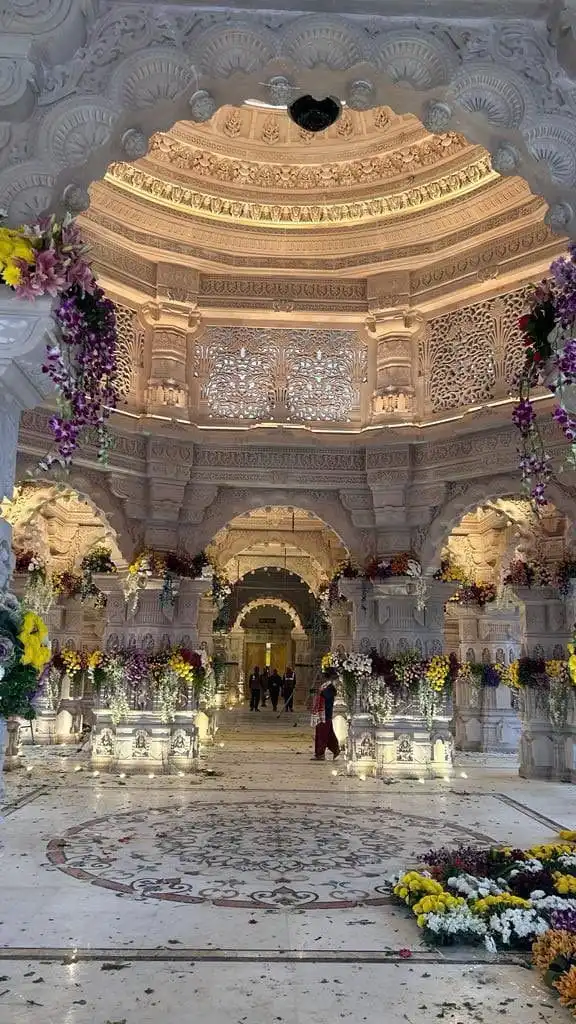
Home to the Ram Janmabhoomi temple, Hanuman Garhi, and Dashrath Mahal. The Saryu aarti at sunset is quieter than Varanasi's,it moves people who expected only the Ram Mandir to remember it most.
Ayodhya, called Ayodhyapuri in Jain tradition, is revered as the birthplace of five Tirthankaras, the enlightened teachers of Jainism, including the very first, Rishabhdev. That makes it one of the most sacred Jain pilgrimage sites in India, alongside its fame in the Ramayana. The city's Jain heritage is marked by five Digambar Jain temples, traditionally built around 1781.
Jain tradition holds that five Tirthankaras were born in Ayodhya: Rishabhdev (Adinath), the first; Ajitnath, the second; Abhinandannath, the fourth; Sumatinath, the fifth; and Anantnath, the fourteenth. Each birthplace is honoured with a temple, making the city a rare site of multiple Tirthankara janma-bhumis. Treat the exact attributions as Jain tradition and confirm details with the temple trusts.
The five Digambar Jain temples marking these birthplaces are spread around the city and date in tradition to 1781. The temple at Raiganj is known for a large, striking Rishabhdev idol. Together they form a compact, meaningful trail for Jain pilgrims and anyone interested in the city's wider sacred history.
A short distance from Ayodhya, Ratnapuri is revered as the birthplace of another Tirthankara, Dharmanath, and is a significant Jain tirtha in its own right. It pairs naturally with the Ayodhya Jain trail for pilgrims making a fuller circuit.
The temples are free to visit, generally open through the day with a midday break, and spread across the city and its edges, so a vehicle and a planned route help. We build a dedicated Jain trail, including Ratnapuri, on request. See the full Ayodhya guide and the itinerary, or explore our packages. Message me, Rajeev, on WhatsApp at +91 7302265809.
Curated itineraries featuring this divine destination.






Grouped for quick scanning
Everything you need to know about Jain Temples.
Topic 01
8 questions
Ayodhya, called Ayodhyapuri in Jain tradition, is revered as the birthplace of five Tirthankaras, including the first, Rishabhdev. That makes it one of the holiest Jain pilgrimage sites in India, marked by five Digambar Jain temples.
Five, by Jain tradition: Rishabhdev (Adinath), Ajitnath, Abhinandannath, Sumatinath and Anantnath. Each birthplace is honoured with a temple, making Ayodhya a rare site of multiple Tirthankara birthplaces.
Rishabhdev or Adinath (the first), Ajitnath (the second), Abhinandannath (the fourth), Sumatinath (the fifth) and Anantnath (the fourteenth), according to Jain tradition. Confirm details with the temple trusts.
Rishabhdev, also called Adinath, is the first Tirthankara of Jainism, regarded as the founder of civilisation and dharma in the current age. Ayodhya is revered as his birthplace, the most significant of the city's Jain links.
A Tirthankara is an enlightened teacher in Jainism who shows the path across the ocean of rebirth. There are twenty-four in the current age, and five were born in Ayodhya by tradition.
Yes. Alongside its Ramayana fame in Hinduism, Ayodhya is a major Jain tirtha as the birthplace of five Tirthankaras. The city holds deep significance for both traditions.
Ayodhyapuri is the name for Ayodhya in Jain tradition, honouring it as the sacred birthplace of five Tirthankaras. It reflects the city's standing as a Jain pilgrimage centre.
Yes, Ayodhya is a notable destination for Jain pilgrims, especially Digambar Jains, who come to honour the Tirthankara birthplaces. The Jain trail is a distinct part of the city's wider pilgrimage life.
Topic 02
8 questions
There are five principal Digambar Jain temples marking the five Tirthankara birthplaces, traditionally dated to around 1781, spread across the city and its edges.
The five temples are traditionally dated to around 1781, built to mark the Tirthankara birthplaces. Confirm specific dates and patronage with the temple trusts.
They are principally Digambar Jain temples. Ayodhya is an especially important pilgrimage site within the Digambar tradition.
The temple at Raiganj is known for a large, striking idol of Rishabhdev, the first Tirthankara. Cited heights vary, so verify locally, but it is the standout image on the Ayodhya Jain trail.
Accounts give different figures for the large Rishabhdev idol at Raiganj, so treat the height as approximate and confirm locally. Whatever the exact measure, it is an imposing and revered image.
They are Digambar Jain temples marking Tirthankara birthplaces, ranging from modest shrines to the more prominent Raiganj temple with its large Rishabhdev idol. Each honours a specific Tirthankara born in the city.
Yes, the five temples are spread across the city and its edges to mark the different birthplaces, so a planned route or a vehicle helps to visit them efficiently.
No, the Jain temples are generally free to visit. Dress modestly and follow each temple's customs, which can be stricter in the Digambar tradition.
Topic 03
6 questions
Ratnapuri, a short distance from Ayodhya, is revered as the birthplace of the Tirthankara Dharmanath and is a significant Jain tirtha in its own right. It pairs naturally with the Ayodhya Jain trail.
Jain tradition honours Ratnapuri as the birthplace of Dharmanath, the fifteenth Tirthankara. It is a notable Jain pilgrimage site near Ayodhya.
It is a short drive from Ayodhya, making it an easy add-on for pilgrims on the Jain trail. Confirm the exact distance and route locally, as it varies by approach.
Yes, for a fuller Jain circuit. Adding Ratnapuri to the five Ayodhya temples gives a more complete Tirthankara pilgrimage, which we can build into a dedicated trail.
Yes. The five Tirthankara temples in Ayodhya, with Ratnapuri nearby, form a meaningful Jain circuit. We design a dedicated Jain trail with a vehicle and timings on request.
Ratnapuri is the principal nearby Jain tirtha. Ayodhya itself, with its five Tirthankara birthplaces, is the heart of the local Jain pilgrimage, and broader circuits can extend further on request.
Topic 04
8 questions
They are generally open through the day with a midday break, and entry is free. Hours vary by temple, so confirm locally, especially if you want to cover several in one trip.
October to March for mild weather, with mornings best for a calm darshan. Jain festival days bring special significance but larger crowds at the temples.
Allow a focused half to full day to cover the five temples comfortably with a vehicle, more if you add Ratnapuri. The temples are spread out, so plan the route.
Accessibility varies by temple, with some easier than others. Tell us your needs and we plan a route that prioritises the more accessible temples and the Raiganj idol.
Yes, dress modestly and respectfully, and note that Digambar temples can have stricter customs. Follow each temple's guidance, remove leather items, and carry a shawl.
Photography rules vary and may be restricted, especially around the idols. Follow each temple's signage and the priests' guidance, and ask before photographing.
Yes, with a vehicle to move between them and attention to each temple's steps. We keep the trail relaxed and prioritise accessible temples for elderly pilgrims.
Yes, the trail suits families, and the large Rishabhdev idol at Raiganj is memorable for children. Keep the pace gentle and use a vehicle between the spread-out temples.
Topic 05
10 questions
A vehicle is the practical way, since the five temples are spread across the city and its edges. We arrange a planned route by car with a guide for the Jain trail.
A guide helps greatly here, to navigate the spread-out temples, explain each Tirthankara, and observe the customs correctly. It turns scattered visits into a coherent pilgrimage.
Yes, foreigners are welcome with respectful, modest dress and adherence to each temple's customs. The Tirthankara birthplaces are of special interest to those exploring Jain heritage.
They are generally calmer than the main Hindu temples, busier on Jain festival days. For a peaceful darshan, visit on an ordinary morning.
Jain festivals such as Mahavir Jayanti and the birth anniversaries of the Tirthankaras born here bring special worship and crowds. Confirm dates, which follow the Jain calendar.
Both make Ayodhya one of India's most sacred cities. The Ramayana honours it as Rama's birthplace, while Jainism honours it as the birthplace of five Tirthankaras. The two traditions sit side by side.
Very much so. As the birthplace of five Tirthankaras, including Rishabhdev, it is among the holiest Jain sites, and the temple trail with Ratnapuri makes a meaningful pilgrimage.
The large Rishabhdev idol at Raiganj, the birthplace temples of the five Tirthankaras, and Ratnapuri nearby. Together they capture Ayodhya's standing as a great Jain tirtha.
Yes. Many pilgrims pair the Jain trail with the main Ram Mandir circuit over two or three days, honouring both traditions in the same visit. We build a combined plan on request.
Tell us your dates and whether to include Ratnapuri, and we plan the route, vehicle, timings and guiding for the Tirthankara birthplaces. See our Ayodhya packages, or message me, Rajeev, on WhatsApp at +91 7302265809.
Topic 06
10 questions
Digambar, meaning sky-clad, is one of the two main Jain traditions, known for its ascetic practices and idols of the Tirthankaras shown without adornment. Ayodhyas Jain temples belong principally to this tradition.
Jain tradition holds that Ayodhya, as an ancient and auspicious capital, was the birthplace of five of the twenty-four Tirthankaras, including the first, Rishabhdev. This concentration makes it a uniquely important Jain tirtha.
Rishabhdev, or Adinath, is revered as the first Tirthankara of the current age, the founder of dharma, society and civilisation in Jain belief. Ayodhya as his birthplace holds special weight for that reason.
Dress modestly, remove leather items and shoes, maintain silence and cleanliness, and follow any rules on entry and photography, which can be stricter in Digambar temples. Ask or follow your guide if unsure.
Yes. As the birthplace of five Tirthankaras, including Rishabhdev, Ayodhya ranks among the holiest Jain pilgrimage sites in India, especially within the Digambar tradition.
Yes, visitors may observe and, respectfully, take part in worship at the temples, following the priests guidance. Special rituals occur on Tirthankara birth anniversaries and Jain festivals.
October to March for comfortable weather, with Jain festival days such as the Tirthankara birth anniversaries carrying special significance. Confirm festival dates, which follow the Jain calendar.
They share the same city but honour different heritages: Hindus revere Ayodhya as Ramas birthplace, while Jains revere it as the birthplace of five Tirthankaras. The Jain temples mark the latter, often away from the main Rama circuit.
Some are within the city near the main circuit and others on its edges, since they mark different birthplaces. A vehicle and a planned route help you cover them alongside or separately from the Ram Mandir.
That Ayodhya honours five Tirthankara birthplaces across five temples, with Ratnapuri nearby; that a vehicle and planned route help; and that Digambar customs apply. We arrange a dedicated, respectful Jain trail on request.
Still have a question?
Message Rajeev on WhatsApp