3 nights / 4 days
Pilgrimage
₹37,000
Starting From


Senior Citizen Kashi Ayodhya Yatra
Varanasi, Prayagraj & Ayodhya (Elders)|Pilgrimage
One City A Day Pace
Lift-Access Rooms
Daily Family WhatsApp
A complete 40-year guide to Dashashwamedh Ghat and the evening Ganga Aarti, including timing, boat viewing details, and avoiding VIP scams.
Drop your details and we'll craft a personalized spiritual package.
The Kashi Vishwanath Temple, the Dashashwamedh Ganga Aarti, a sunrise boat ride past the 80-plus ghats, and Sarnath, where the Buddha gave his first sermon
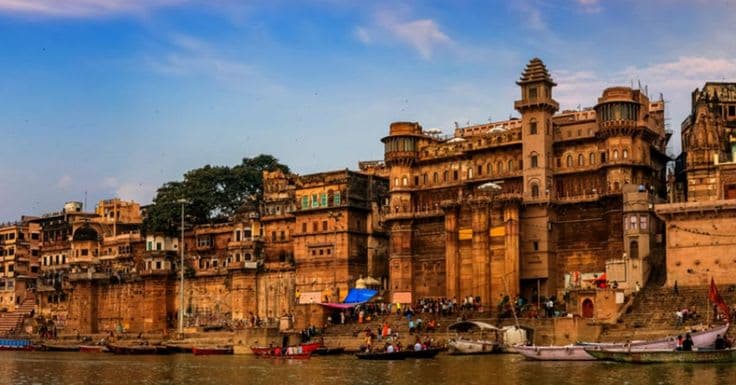
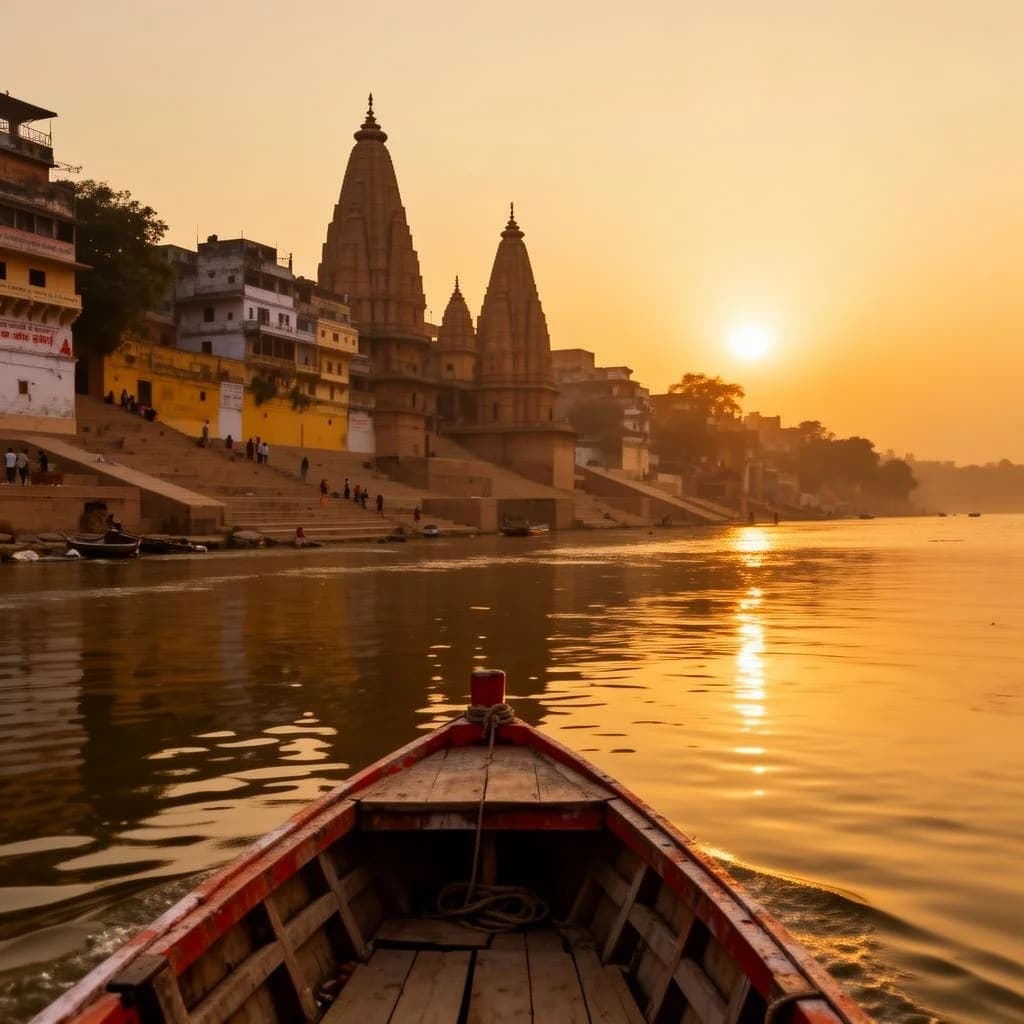
Dashashwamedh is the main ghat of Varanasi, a short walk from Kashi Vishwanath, and the stage for the city's most famous ceremony. The name means the ghat of ten horse sacrifices, from dasha (ten), ashwa (horse) and medha (sacrifice). By tradition, Lord Brahma performed the Dashashwamedha yajna here, and the ghat is ranked among the most sacred on the Ganga. By day it is a busy riverfront of pilgrims, boatmen and flower sellers. By dusk it becomes the centre of Kashi.
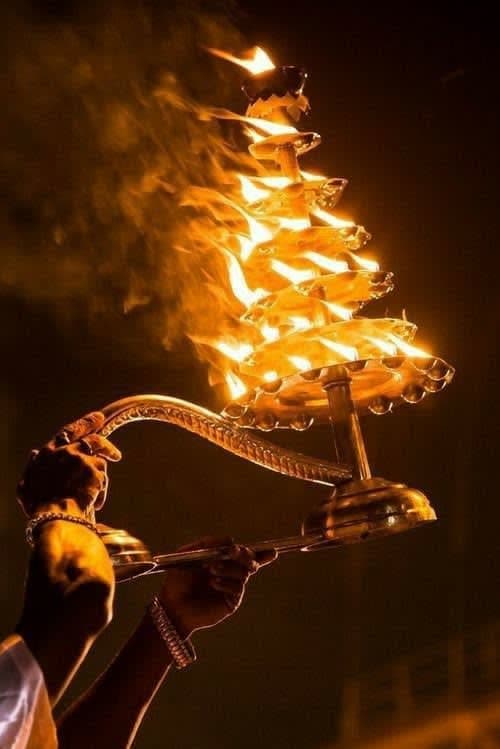
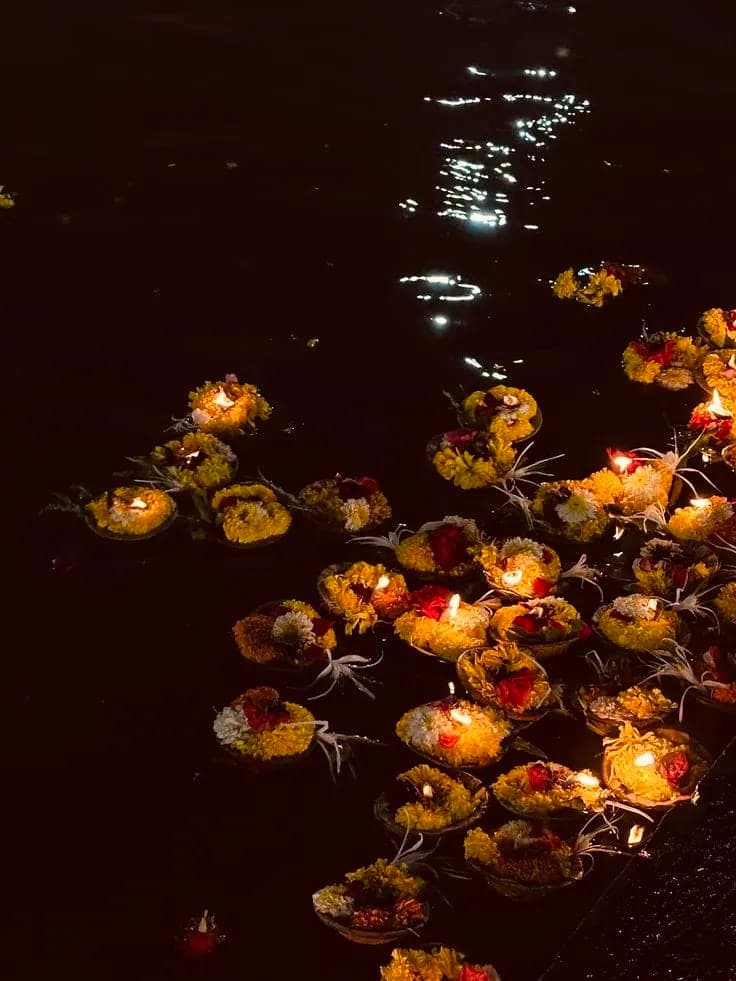
The Ganga Aarti is a worship of the river itself. Aarti, from the Sanskrit, means the removal of darkness. Every evening, seven young priests in saffron stand on raised platforms and move multi-tiered brass lamps in synchronised circles to conch blasts, bells and Sanskrit chants. The ceremony runs about 40 to 45 minutes and ends with hundreds of small flower diyas released onto the water.
The aarti in its present grand form is organised by Ganga Seva Nidhi, a trust founded in 1991 to revive the daily worship of the Ganga. Before that, the ceremony was sporadic; today it draws thousands every single evening, in rain, fog or holiday.
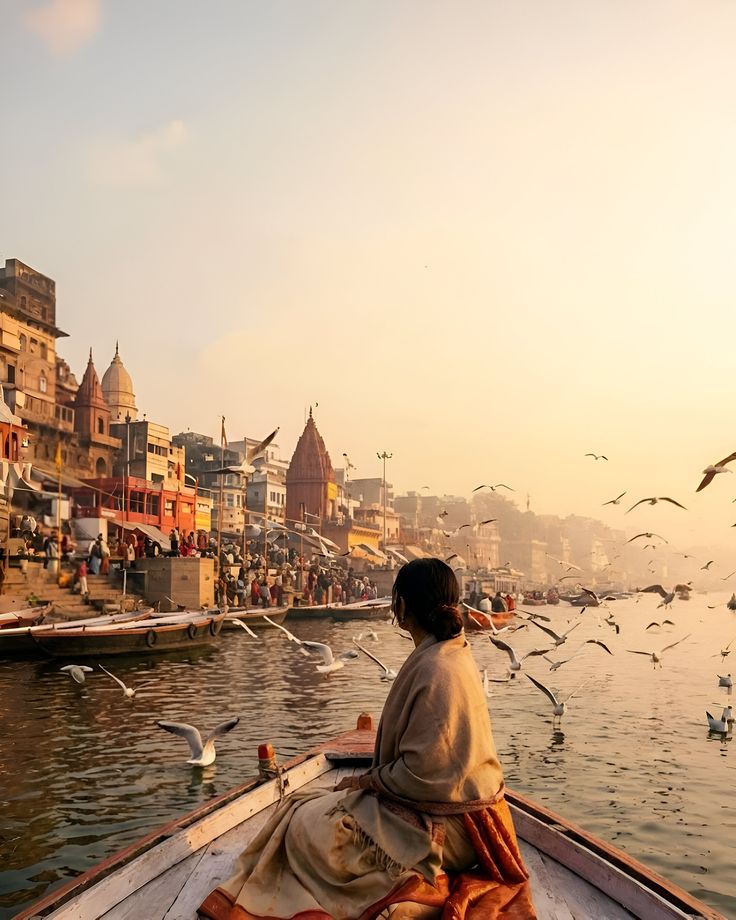
From the ground: People ask me which seat is best. After 40 years, my honest answer is the water. From a boat held a few metres off the ghat you see all seven priests at once, the lamps reflected on the river, and you are out of the crush on the steps. For first-timers, that single choice changes the whole evening.
Approximate sunset starting times through the year
Watching the Ganga Aarti from the ghat steps is completely free. There is no entry ticket. Anyone on the street selling you an “aarti ticket” or a “special viewing pass” is a tout, not an official.
Remember: The Ganga Aarti is free to watch from the steps. The only genuine paid experiences are a boat, a riverside balcony with a cover charge, or official Ganga Poojan participation through Ganga Seva Nidhi. Street-sold “VIP passes” are a tout trap.
Vantage options and verification details
Four ways to see the aarti, each a different experience
A boat is the best vantage, and it is the one paid option I recommend most. Prices vary widely with boat type, season and bargaining, so confirm before boarding.
Position the boat about thirty metres off the ghat, roughly in line with the centre platform, and arrive around fifteen to twenty minutes before the aarti, since the river fills with boats as the ceremony starts. Book your boat the day before so you are not negotiating in the evening rush. Our Ganga boat ride guide covers fares and the sunrise ride in detail.
From the ground: The classic boat scam is a low per-person quote that becomes a mid-river demand for more. Agree a single total for the whole boat and the full route before you step in, or let us arrange a vetted boatman with a fixed price and life jackets.
Indicative rates for aarti boat rides
Dashashwamedh fills rapidly. On weekdays, reach the steps 60 minutes before the start; on weekends, full-moon nights and festivals, push it to 90 minutes or more. Police clear lanes roughly an hour before the ceremony. Boat riders have more freedom and can arrive 15 to 20 minutes before. The crowd is dense, sometimes very dense, so keep your bag in front of you and your phone in a zipped pocket. If you are with elders or children, plan to leave a few minutes before the very end, because the post-aarti surge is the hardest part.
If you want to do more than watch, you can take part in a Ganga Poojan, an offering to the river performed by a priest, organised officially through Ganga Seva Nidhi. You receive an official receipt and, in many arrangements, escorted seating. The official registration window is short and opens in the late afternoon, which is why many visitors arrange it through a guide. This is the genuine, organised participatory option, as opposed to a street agent's “VIP seat”.
The aarti is photogenic throughout, especially in the first ten minutes when the fire is fresh and the sky still has colour. From the steps you will want a zoom; from a boat a wide angle works. Dress modestly, covering shoulders and knees, because this is genuine worship, not a show. You may receive a blessing from the priests after the ceremony if you queue politely to the side. Tripods on the crowded public steps are discouraged and police may ask you to remove them on busy nights.
The ghat is one of the safest, most patrolled public spaces in Varanasi, but the dense crowd attracts pickpockets. Keep valuables in front, secure your phone, stay back from the water's edge so you are not jostled into it, and decide your exit route before the ceremony ends. Do not buy “VIP passes” from anyone on the street. If you feel hemmed in, the calmer alternative is a boat or the quieter Assi Ghat morning aarti.
Dashashwamedh sits in the heart of the old city, near Godowlia. Vehicles stop at Godowlia crossing and you walk the last stretch. It is roughly a five-minute walk from Kashi Vishwanath Temple, which is why most pilgrims pair morning darshan with the evening aarti. Manikarnika Ghat, the cremation ghat, lies a short way upstream, and the full riverfront is covered in our ghats of Varanasi guide.
We are Experience My India, rated 4.5 stars on TripAdvisor and Google, with 50,000+ guests served since 2018. We arrange a vetted private boat at a fixed price with life jackets, position it for the best view, and combine it with your Kashi Vishwanath darshan so the evening flows without touts or haggling. See our Varanasi packages or message Rajeev's team on WhatsApp at +91 7302265809. New to the city? Start with our Varanasi travel guide.
Curated itineraries featuring this divine destination.






Grouped for quick scanning
Everything you need to know about Dashashwamedh Ghat and Ganga Aarti.
Topic 01
8 questions
Dashashwamedh is the main ghat of Varanasi, on the western bank of the Ganga near Godowlia, and the site of the city's grandest evening ceremony, the Ganga Aarti. The name means the ghat of ten horse sacrifices. It is a short walk from Kashi Vishwanath Temple and ranks among the most sacred ghats on the river.
It comes from dasha (ten), ashwa (horse) and medha (sacrifice or yajna), so it means the ghat of ten horse sacrifices. By tradition, Lord Brahma performed the Dashashwamedha yajna here. The name reflects an ancient sacrificial rite associated with the spot, which is why the ghat carries such spiritual weight.
The Ganga Aarti is an evening worship of the Ganga river. Seven priests move multi-tiered brass lamps in synchrony to conch, bells and Sanskrit chants, for about 45 minutes, ending with flower diyas floated on the water. Aarti means the removal of darkness. At Dashashwamedh it is the most spectacular version in Varanasi.
It is performed by seven young Brahmin priests, often a rotating team, and organised by Ganga Seva Nidhi, a trust founded in 1991 to revive the daily worship of the Ganga. Before 1991 the ceremony was sporadic; the trust turned it into the grand daily ritual seen today.
Because it is a nightly, large-scale fire ritual of rare beauty and continuity, performed without exception every evening for decades, drawing thousands. The synchronised lamps, the sound of conch and bells, and the river setting make it one of India's most striking ceremonies and a defining experience of Varanasi.
Yes, every evening without exception, regardless of rain, fog, holidays or power cuts to the rest of the city. The priests are always there. This reliability is part of what makes it special; you do not need to time your trip to a particular day to witness the evening aarti.
Yes. There is a smaller sunrise aarti (Pratah Aarti) at Dashashwamedh, quieter and more devotional, around 5:00 to 6:15 AM by season. The most popular morning programme, however, is Subah-e-Banaras at Assi Ghat, with chanting, music and yoga. The grand ceremony is the evening one.
About 40 to 45 minutes, both the evening and the morning versions. The most photogenic moment is the first ten minutes, when the fire is fresh and the sky still has colour. It concludes with the release of small flower diyas onto the river, which is the loveliest closing moment.
Topic 02
6 questions
It starts at sunset, so it shifts seasonally. Roughly 5:45 to 6:30 PM in winter and 6:45 to 7:15 PM in summer, with the earliest starts around 5:30 PM in December and January. Always confirm the exact time the evening before, as organisers adjust for the river and crowds.
Yes. Because it begins at sunset, the start time drifts through the year: earlier in winter, later in summer. The ceremony typically begins 10 to 15 minutes after the sun goes down. This is why a fixed time online can mislead; check the current evening's time before you set out.
In winter, roughly October to March, the aarti starts around 5:45 to 6:30 PM, with December and January being earliest, near 5:30 to 5:45 PM. Arrive 60 to 90 minutes early for a good step position, as winter is peak tourist season and the ghat fills quickly.
In summer, roughly April to September, the aarti starts later, around 6:45 to 7:15 PM, following the later sunset. Evenings are hot on the ghat, so a boat is more comfortable thanks to the river breeze. Carry water and arrive a little before the start.
Check with your hotel or guide the evening before, or watch the local schedule, since the time shifts with sunset and can move by 10 to 15 minutes for the river level or crowd control. If we are arranging your evening, we confirm the time and your boat or seat in advance.
Yes, significantly. On Dev Deepawali and Kartik Purnima the schedule extends and shifts, with much larger crowds and longer rituals. Arrive far earlier on these dates and book a boat well ahead. See our Dev Deepawali page for the festival timing and viewing strategy.
Topic 03
7 questions
Yes. Watching from the ghat steps is completely free, with no entry ticket. You only pay if you choose a boat, a riverside balcony with a cover charge, or official Ganga Poojan participation. Anyone selling you an "aarti ticket" or "viewing pass" on the street is a tout, not an official.
No, there is no official ticket to watch the ceremony from the public steps. The genuine paid experiences are a boat on the river, a balcony seat at a riverside restaurant, or an official Ganga Poojan through Ganga Seva Nidhi. Street-sold "VIP seat passes" are a common scam.
Street agents sell "VIP aarti seats" or "viewing passes" for ₹600 or more, implying they control reserved seating in what is actually a free public area. Many of these are not officially organised. The honest options are arriving early for the free steps, a boat, or official Ganga Poojan. Decline street sellers.
There are some genuine seated arrangements, including official Ganga Poojan seating and chairs arranged by legitimate operators. The problem is street agents selling "VIP chairs" they do not control. If you want guaranteed seating, arrange it through an official Ganga Poojan or a verified operator, not a stranger on the steps.
A boat is the main one: roughly ₹600 to ₹2,000 for a private wooden boat for two to four people, or ₹150 to ₹300 per person shared. Riverside balconies charge a cover or food bill. Official Ganga Poojan has its own donation. The steps themselves cost nothing.
No. Any donation is voluntary. You may be offered a small diya to float for a token amount, which supports the ceremony, and that is fine if you wish. What is not legitimate is a stranger demanding a large "donation" or "seat fee". Give only if you choose, and only small amounts.
Do not engage with anyone selling tickets, passes or seats on the street; keep walking. Decide in advance whether you want the free steps, a pre-booked boat or official Ganga Poojan. Arrive early so you are not pressured by the crowd. A guide or pre-arranged boat removes the tout problem entirely.
Topic 04
8 questions
From a boat positioned about thirty metres off the ghat, roughly in line with the centre platform. You see all seven priests at once, with the lamps reflected on the water, away from the crush on the steps. If you prefer the steps, the front rows near the railing are best.
A boat gives the best, calmest, most complete view and suits photographers, families and elders. The steps give you the up-close energy and the crowd, which many first-timers want to feel. Both are worthwhile; if you only do one, the boat is the more comfortable and photogenic choice.
Roughly ₹600 to ₹2,000 for a private wooden boat for two to four people for the aarti, or ₹150 to ₹300 per person on a shared boat. Prices vary with boat type, season and bargaining. Agree the full total and route before boarding, never a per-person rate that can change.
Book the day before, either through your hotel for price certainty, through us for a vetted boat with life jackets, or directly with a boatman at the ghat. Confirm the total price, the route and the return time in advance. Avoid boatmen who approach you aggressively on the steps.
About thirty metres off the ghat, roughly opposite the centre altar, so you face the priests with the lamps reflecting toward you. Slightly upstream gives photographers a fine reflection angle. Tell your boatman in advance you want the prime angle opposite the altar, not a crowded far position.
Boats typically depart around 45 to 75 minutes before the aarti to get into position before the river fills, often around 4:45 to 6:30 PM depending on the season. You can arrive at the ghat later than step viewers, but the boat must position early for a front spot. Confirm departure with your boatman.
Yes. Several restaurants and guesthouses along the Dashashwamedh waterfront offer balcony seating, usually for a cover charge or a food bill. The view is slightly elevated, from behind the priests, looking out over the river. It is a calmer, seated option if you do not want the steps or a boat.
Generally yes, on a properly operated boat. Insist on life jackets, do not overload the boat, and avoid boatmen anchoring dangerously close to others. The river is crowded with vessels during the ceremony, so a calm, experienced boatman matters. A pre-arranged boat with safety gear is the most reliable choice.
Topic 05
8 questions
For a good step position, reach Dashashwamedh 60 minutes before the start on weekdays, and 90 minutes or more on weekends, full-moon nights and festivals. Police clear lanes about an hour before. Boat viewers have more flexibility and can arrive 15 to 20 minutes before the ceremony begins.
Very crowded, especially in peak winter and on weekends and festivals, with dense crowds packing the steps. The corridor opening in 2021 increased footfall further. The density is part of the atmosphere but means pickpocket risk and a difficult exit. A boat or the quieter Assi morning aarti avoids the crush.
Yes, the ghat is well patrolled and one of the safer public spaces in Varanasi. The main risks are pickpockets in the dense crowd and the post-ceremony surge. Keep your bag in front, secure your phone, stay back from the water's edge, and plan your exit before the aarti ends.
Yes, but choose a boat or a balcony rather than the packed steps, and plan to leave a few minutes before the very end to avoid the surge. Elders and children manage the ceremony best from a seated, less crowded vantage. We can arrange the calmest option for your group.
Dress modestly, covering shoulders and knees, as this is genuine worship rather than a performance. Comfortable footwear helps for the walk through the lanes and the steps. In winter evenings carry a light layer, and in summer carry water, since the ghat is hot before sunset.
Yes, photography of the ceremony is allowed and encouraged, and it is beautiful, especially in the first ten minutes. From the steps use a zoom; from a boat a wide angle. Tripods on the crowded public steps are discouraged and police may ask you to remove them on busy nights.
You cannot perform the main ritual, but you can take part through an official Ganga Poojan, receive a blessing from the priests afterward by queuing politely to the side, and float a flower diya on the river. From a boat, the boatman can hand you a diya to release yourself.
Yes. Small flower diyas are sold near the ghat for a token amount, and floating one on the river at the end of the ceremony is a moving moment. From a boat, your boatman can hand you a diya to release directly onto the water. Buy from authorised sellers and pay only a small sum.
Topic 06
5 questions
Very close, roughly a five-minute walk through the lanes, or a short approach via the Dham corridor on the ghat side. This is why most pilgrims do morning darshan at Kashi Vishwanath and return for the evening Ganga Aarti at Dashashwamedh on the same day.
Yes, Manikarnika, the main cremation ghat, lies a short distance upstream from Dashashwamedh and can be seen on a boat ride along the river. It is an active cremation site, so observe quietly and respectfully, with no photography of the pyres. See our Manikarnika Ghat page for the sensitivities.
See Dashashwamedh for the grand spectacle and the full Varanasi energy, and Assi for a calmer, more participatory dawn programme with music and yoga. Many visitors do both: the evening aarti at Dashashwamedh and the Subah-e-Banaras morning programme at Assi on another day.
Take an auto, taxi or e-rickshaw to Godowlia crossing, then walk the last few minutes to the ghat, as vehicles cannot go all the way. From the river, any boat can drop you. Our how to reach Varanasi guide covers fares, and our guides handle the transfer so you arrive in good time.
Yes, and it is a wonderful pairing. Watch the evening aarti from a boat one day, and take a sunrise boat ride past the ghats another morning to see the city wake up. We build both into Varanasi packages, with a vetted boatman, fixed prices and the best positioning for each.
Topic 07
5 questions
It is a daily worship of the Ganga, honouring the river as a goddess and a source of life and liberation. Aarti means the removal of darkness, so the lamps offered to the river symbolise dispelling ignorance. At Dashashwamedh it also continues a tradition revived in 1991 to make the worship a grand daily event.
They use large multi-tiered brass lamps, conch shells (shankh), hand bells, incense, peacock-feather fans and camphor flames, moving them in synchronised circles. The combination of fire, sound and smoke against the river at dusk is what gives the ceremony its power. Each priest mirrors the others in precise choreography.
For the free public steps, no, it is first-come, so arriving early secures a better position. Official Ganga Poojan participants and verified-operator arrangements may have reserved seating. Street agents selling "assigned VIP seats" in the free public area should be ignored. For guaranteed seating, use an official or verified channel.
The Varanasi aarti at Dashashwamedh is the grandest and most theatrical, with seven synchronised priests and very large crowds, set against the old city. Haridwar and Rishikesh aartis are also beautiful but smaller and differently styled. For sheer scale and spectacle, Dashashwamedh is the most famous of the three.
No. The evening aarti is performed every day without exception, including in rain and fog. In heavy rain the priests may shelter the ceremony, but it continues. This reliability means you do not need to plan your trip around a specific day to see the evening aarti at Dashashwamedh.
Topic 08
6 questions
October to March offers the most comfortable evenings and clear conditions, which is why it is peak season and the most crowded. For something extraordinary, Dev Deepawali in November lights all the ghats with lakhs of lamps. Summer evenings are hot on the ghat, so a boat is more comfortable then.
Generally no. The core aarti zone is treated as a restricted area, and festival windows such as Dev Deepawali and Kartik Purnima see explicit drone bans. Flying without proper permission risks confiscation. If you need aerial footage, you would require official clearances; casual drone flights are not advisable here.
The crowded steps are difficult for wheelchairs, so a boat or a riverside balcony is the better choice for limited mobility, giving a seated, stable view. Tell us in advance and we arrange the most accessible vantage, the nearest practical drop-off, and assistance so the evening is comfortable.
Yes, many pilgrims collect Ganga jal in a copper or steel pot to carry home, and small vessels are sold near the ghats. Collect from a designated bathing area, handle it respectfully, and keep it sealed. This is a common and meaningful part of the Kashi visit for devout pilgrims.
No. Varanasi is a deeply traditional, holy city, and being intoxicated near the ghats is both inappropriate and likely to draw a strong reaction from locals, and it is treated as an offence near sacred sites. Treat the riverfront as a place of worship and keep conduct respectful at all times.
Thousands attend every evening, and the seated and standing areas around Dashashwamedh can hold very large numbers, with the ghat able to accommodate several hundred for the core viewing area and many more along the steps. Crowds are largest in winter, on weekends and during festivals, so plan arrival and exit accordingly.
Still have a question?
Message Rajeev on WhatsApp