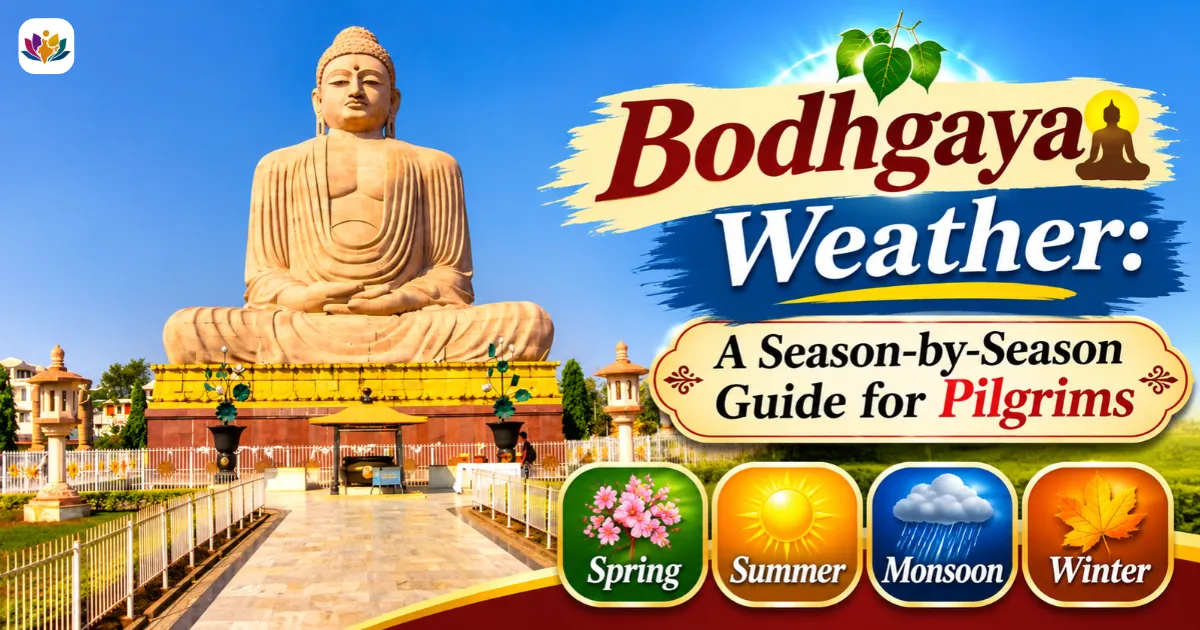
Bodhgaya, in the Gaya district of Bihar, has a classic north Indian climate: hot, dry summers, a warm and humid monsoon and cool, comfortable winters. For most pilgrims the weather is the single biggest factor in when to come, because the Mahabodhi Temple, the Bodhi Tree and the walk between the monasteries are all in the open air. Having brought travellers here across the seasons, let me set out the Bodhgaya weather plainly, month by month, so you can choose the right time and pack for it. Browse our Ayodhya Varanasi Tour Packages to plan the trip with a local guide.
Bodhgaya Weather: Key Takeaways
- Best time: October to March, the cool and dry months, with winter the most comfortable of all.
- Winter (Nov to Feb): pleasant days of about 20 to 25 C, cold mornings and nights; carry warm layers.
- Summer (Mar to Jun): hot and dry, often 38 to 44 C in peak May; start early and rest at midday.
- Monsoon (Jul to Sep): warm, humid and green, with heavy rain; the crowds thin and the land freshens.
- Always check live: the figures here are seasonal averages, so look at a current forecast before you pack.
A Word From Your Guide
I am Rajeev Sharma, born in Varanasi and guiding pilgrims across Bodhgaya, Gaya, Kashi, Prayagraj and Ayodhya for more than forty years. Bodhgaya is an open-air pilgrimage, the Bodhi Tree, the Mahabodhi courtyard, the monastery road, so the weather shapes the whole day. I always tell people to come in the cool months if they can and to respect the Bihar summer if they cannot. I speak Hindi, Telugu and Kannada, so South Indian families are at ease. Here is the honest season-by-season picture.
Bodhgaya Weather Month by Month
A rough guide to the temperatures and conditions you can expect through the year. These are typical seasonal averages, not a forecast, so always check a live weather service close to your travel dates.
| Month | Typical day / night | Conditions |
| January | About 23 C / 8 C | Cool, dry, sunny; chilly mornings |
| February | About 26 C / 11 C | Pleasant and dry; warming gently |
| March | About 32 C / 16 C | Warm days, comfortable; spring |
| April | About 38 C / 22 C | Hot and dry; start getting fierce |
| May | About 40 to 44 C / 27 C | Peak heat; very hot and dry |
| June | About 38 C / 27 C | Hot and humid; monsoon nears |
| July | About 33 C / 26 C | Warm, humid, heavy rain spells |
| August | About 32 C / 26 C | Humid monsoon; green landscape |
| September | About 32 C / 25 C | Rain easing; still warm and humid |
| October | About 31 C / 21 C | Pleasant, drying out; a fine time |
| November | About 28 C / 15 C | Cool, dry, clear; excellent |
| December | About 24 C / 9 C | Cool to cold; crisp and sunny |
Seasonal averages for general guidance only; actual temperatures vary year to year. Check a live forecast (IMD or a trusted weather app) before travel.
Season by Season in Detail
- Winter, November to February: the best weather of the year. Days are mild and sunny, ideal for the Mahabodhi Temple and the monasteries, while mornings and nights turn genuinely cold, so warm layers, a cap and a shawl are needed for the dawn meditation.
- Summer, March to June: hot and dry, building to a fierce peak in May when it can touch 44 C. If you must come, do your darshan at dawn and after sunset, rest at midday and carry water, a hat and sunscreen.
- Monsoon, July to September: warm, humid and often wet, with heavy downpours. The crowds thin, the fields turn green and the air clears, but carry rain gear and expect the odd travel delay.
- Autumn, October: the shoulder month when the heat and rain both fade. Pleasant, fresh and quieter than peak winter, it is a lovely, underrated time to come.
The Best Time to Visit Bodhgaya
For comfort and for the great Buddhist gatherings, the window from October to March is the clear best time to visit Bodhgaya. Winter in particular, from November to February, brings pleasant days and the main pilgrimage season, when monks and travellers from across the Buddhist world fill the Mahabodhi courtyard. If you can bear a cold dawn for the chanting under the Bodhi Tree, this is the season to come. Avoid the peak summer of May and June unless your travel is fixed.
What to Pack for Bodhgaya
- In winter: warm layers, a fleece or light jacket, a cap and a shawl for cold dawns, plus modest clothing that covers shoulders and knees for the temple.
- In summer: light cottons, a wide hat, strong sunscreen, sunglasses and a refillable water bottle; a small umbrella for shade.
- In the monsoon: a rain jacket or umbrella, quick-dry clothes, sandals with grip and a dry bag for your phone and camera.
- All year: comfortable walking shoes that slip off easily for the temple and modest dress for the monasteries.
Weather Along the Buddhist Trail
Bodhgaya shares its climate with the wider Buddhist trail, so the same seasons suit the whole journey. If you are adding Sarnath near Varanasi, where the Buddha gave his first sermon, the cool months are best there too:
- Sarnath - the deer park of the Buddha's first sermon, loveliest in winter.
- Mulagandha Kuti Vihar - the temple with its frescoes of the Buddha's life.
- Sarnath Archaeological Museum - home to the Ashokan lion capital, India's emblem.
- Chaukhandi Stupa - the mound where the Buddha met his first disciples.
- Vishwa Shanti Stupa - the white peace pagoda at Sarnath.
For the short hop, see our guide to the drive from Varanasi to Sarnath.
Pair Bodhgaya with Kashi in the Cool Season
The same October to March window is the finest time for Kashi, where most Bodhgaya pilgrims begin. While the weather is kind, keep time for the Kashi Vishwanath Temple, the evening Ganga Aarti at Dashashwamedh, a dawn boat ride on the Ganga and a quiet moment at Manikarnika Ghat. Many reach the city from Lucknow to Varanasi and travel east from Lucknow to Gaya for Bodhgaya.
Festivals and the Weather
The cool season also carries great occasions. Winter is the main Buddhist pilgrimage season at the Mahabodhi Temple and Buddha Purnima, which falls in the warmer spring, is the holiest festival of all, kept at Bodhgaya and at Sarnath. If you are pairing with Varanasi, our guide to the best time to visit Varanasi follows the same seasons.
Make It a Wider Winter Circuit
Because the cool months suit the whole north, many pilgrims thread Bodhgaya into a longer winter circuit with Prayagraj and Ayodhya, where the weather is just as kind. If that tempts you, see how travellers move from Varanasi to Ayodhya and ask us to build the whole journey around the best season.
The Honest Bit
Let me be straight with you. Bodhgaya in the right season is gentle and green, but the Bihar summer is no joke. May and June can touch the mid-forties and an open-air pilgrimage in that heat is punishing, especially for elders and children. The monsoon is cooler but wet and can snarl travel. If your dates are flexible at all, come between October and March; if they are not, plan around the heat with dawn-and-dusk darshan and plenty of water. And whatever the month, check a live forecast before you pack, because averages are only averages.
Why Experience My India Is the Right Choice
I am Rajeev Sharma, born in Varanasi and guiding pilgrims for more than forty years across Bodhgaya, Gaya, Kashi, Prayagraj and Ayodhya. For Bodhgaya we plan the trip around the weather: the cool season for comfort, dawn darshan in summer if your dates are fixed and warm cars and good stays for the cold mornings. We add the Buddhist trail to Sarnath and Kashi and the pind daan at Gaya if you wish. I speak Hindi, Telugu and Kannada, so South Indian families are at ease. With our Ayodhya Varanasi Tours team, the season is taken care of.
| Tip from Rajeev Sharma: Come in the cool of winter if you can and give the dawn to the Bodhi Tree, wrapped in a shawl, when the chanting begins and the courtyard is still. Keep the bright middle of the day for the monasteries and the Great Buddha and the soft evening for the last circle of the Mahabodhi. If you can only come in summer, flip the day, be out at first light and after dark and rest through the fierce midday. Either way, carry water, dress modestly and check the forecast the week before you leave. |
Related Packages
- Buddhist circuit package - Sarnath to Bodhgaya, the path of the Buddha, best in the cool season.
- Kashi Buddha Trail, 6 days - Kashi, Sarnath and Bodhgaya together.
- Kashi Gaya Ayodhya tour package - the great tirthas in one winter journey.
- Gaya pind daan package - add the shraddha at nearby Gaya.
- Complete circuit: Ayodhya, Prayagraj, Kashi & Bodhgaya, 10 days - the grand pilgrimage, Bodhgaya included.
Plan Your Bodhgaya Trip Around the Weather
Tell me your dates and your group size and I will plan the trip around the season: the cool months for comfort, dawn darshan if you come in the heat, warm stays for the cold mornings and the Buddhist trail to Sarnath and Kashi if you wish. Call and WhatsApp +91 7302265809 and we will plan it together.
| Book Your Ayodhya - Varanasi Trip Today |
| 📞 +91-7302265809 |
| 💬 WhatsApp: +91-7302265809 |
| We Reply in 30 Minutes |
| Packages start from ₹1,999/ person | Rated 4.9★ |
| Explore all: Ayodhya Varanasi Tours |
| Jai Shri Hari 🙏 |