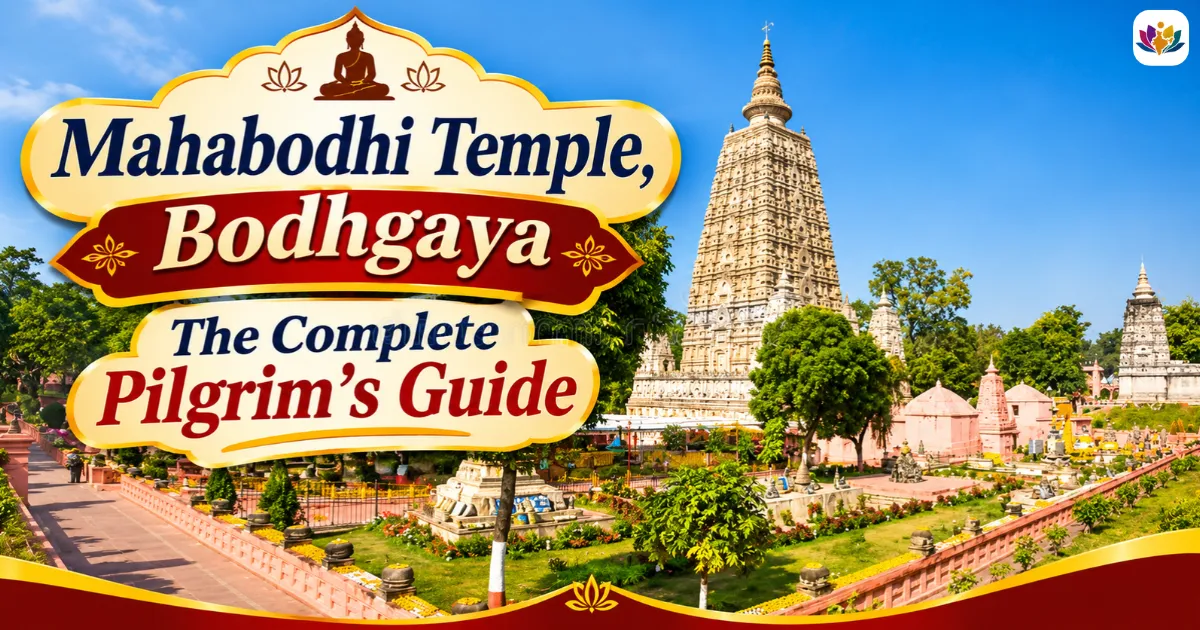
The Mahabodhi Temple in Bodhgaya, Bihar, is the holiest place in the Buddhist world, the exact spot where Prince Siddhartha became the Buddha under the Bodhi Tree. A UNESCO World Heritage Site, it was first raised by Emperor Ashoka in the third century BCE and the great brick tower you see today dates from the Gupta period, the fifth to sixth centuries CE. For a pilgrim it is the heart of the whole Buddhist trail. Having brought travellers here many times, let me give you a complete guide to the Mahabodhi Temple, its history, its sacred spots, its timings and rules and how to reach it. Browse our Ayodhya Varanasi Tour Packages to plan the Buddhist trail with a local guide.
Mahabodhi Temple: Key Takeaways
- What it is: the site of the Buddha's enlightenment, a UNESCO World Heritage Site in Bodhgaya, Bihar.
- Who built it: first by Emperor Ashoka in the 3rd century BCE; the present brick tower is Gupta-era, 5th to 6th century CE.
- The heart of it: the Bodhi Tree, the Vajrasana diamond throne and the 50-to-55-metre shikhara over the gilded Buddha.
- Timings and entry: open daily about 5:00 AM to 9:00 PM; entry free. Phones and electronics are banned inside.
- Best season: October to March, when the weather is pleasant for the open courtyard.
Timings, fees and rules here follow the temple's published information but can change; confirm the current details before your visit.
A Word From Your Guide
I am Rajeev Sharma, born in Varanasi and guiding pilgrims across Bodhgaya, Sarnath, Kashi and the wider Buddhist trail for more than forty years. The Mahabodhi Temple is the one place I never tire of; to sit under the Bodhi Tree at dawn, as the chanting begins, is to feel the whole weight of the tradition settle on you. But it is also a strict, sacred place with real rules and first-timers are often caught out by the phone ban and the queues. Let me walk you through all of it so your visit is calm and unhurried. I speak Hindi, Telugu and Kannada, so South Indian families are at ease.
History: Who Built the Mahabodhi Temple
The Mahabodhi Temple was first established by Emperor Ashoka in the third century BCE, who placed a shrine and the Vajrasana at the spot of the enlightenment. The surviving brick temple, one of the earliest and grandest brick structures in India, was built during the Gupta period in the fifth to sixth centuries CE. Restored and revered across the centuries by rulers and pilgrims from many lands, it was inscribed as a UNESCO World Heritage Site for its outstanding place in the history of Buddhism and of Indian architecture.
The Architecture of the Mahabodhi Temple
The temple is a masterpiece of early Indian brickwork. Its central tower or shikhara, is a pyramidal spire rising about 50 to 55 metres, crowned with a stupa-like finial and flanked by four smaller towers of the same shape at the corners. Inside the sanctum sits a gilded image of the Buddha in the bhumisparsha mudra, the earth-touching posture of the moment of enlightenment. The whole complex, about 4.86 hectares, sits some five metres below the surrounding ground, ringed by ancient carved stone railings and preserves the seven places where the Buddha spent the seven weeks after his awakening.
The Seven Sacred Spots of the Seven Weeks
The deepest part of a Mahabodhi visit is to follow the seven places where the Buddha passed the seven weeks after his enlightenment. Each lies within the complex:
| Week / Spot | What happened | Where in the complex |
| The Bodhi Tree | The enlightenment itself, under the sacred tree | West of the main temple |
| Vajrasana (Diamond Throne) | Ashoka's slab marking the exact seat | Between the shrine and the tree |
| Animeshlochan Chaitya | Week 2: gazing unblinking at the tree in gratitude | Northeast of the temple |
| Ratnachakrama (Jewel Walk) | Week 3: walking in meditation, lotuses mark his steps | Along the northern wall |
| Ratnaghar Chaitya | Week 4: meditating as five-coloured light shone | Northwest corner |
| Ajapala Nigrodha Tree | Week 5: answering a Brahmin on true equality | Near the eastern entrance |
| Muchalinda Sarovar | Week 6: the serpent king shielded him in a storm | South of the temple, the lotus pond |
| Rajayatana Tree | Week 7: two merchants became his first lay disciples | Southeast of the shrine |
Walking the seven spots in order, clockwise, is the traditional way to experience the Mahabodhi complex.
Timings, Entry Fee and Daily Rituals
The temple is managed by the Bodhgaya Temple Management Committee and opens every day. The details below follow its published information; treat fees and timings as indicative and confirm them when you visit.
| Category | Details |
| Temple hours | About 5:00 AM to 9:00 PM daily |
| General entry | Free for all Indian and international visitors |
| Meditation Park | About 20 rupees per person |
| Camera / video | About 200 rupees still, 300 rupees video (outer complex only) |
| Morning chanting | About 5:30 to 6:00 AM, Sutta chanting and meditation |
| Kheer offering | About 10:00 AM, the daily offering of rice pudding |
| Evening chanting | About 6:00 to 7:00 PM, Mahayana then Pali |
Fees and timings are set by the temple committee and change from time to time; the figures above are a guide, not a guarantee.
Rules and Etiquette Inside the Temple
- No phones or electronics: mobile phones, smartwatches, power banks and gadgets are banned inside; free cloakroom lockers are at the main gate.
- No photography in the sanctum: even with a paid camera ticket, no photos or video inside the main shrine.
- Remove footwear: shoes and socks come off before the outer courtyard; use the shoe counters at the entrance.
- Modest dress: wear comfortable clothing covering shoulders and knees.
- Silence and parikrama: keep silence, especially by the Bodhi Tree and Meditation Park and always walk clockwise around the shrine and stupas.
The phone ban surprises many first-timers; leave your phone at your hotel or use the free lockers and carry a little cash for tickets.
Best Time to Visit the Mahabodhi Temple
The cool months from October to March, when temperatures are a pleasant 8 to 25 degrees, are the best time to visit, with the winter the main Buddhist pilgrimage season of great international gatherings. Buddha Purnima in spring, the Buddha's birthday, is the holiest festival of all. Avoid the fierce Bihar summer. If you are pairing with Kashi, our guide to the best time to visit Varanasi follows the same seasons.
How to Reach Bodhgaya and the Temple
- By air: Gaya International Airport is the nearest, about 12 km away, with domestic flights and seasonal international ones from Thailand, Myanmar and Sri Lanka.
- By train: Gaya Junction, about 16 to 17 km away, connects to Delhi, Kolkata, Varanasi and Patna; taxis and autos wait outside.
- By road: Bodhgaya is about 115 km south of Patna (around 3 hours) and about 250 km east of Varanasi (5 to 6 hours).
Many pilgrims reach Bodhgaya through the region's great cities; see our guides to the journey from Lucknow to Gaya and from Lucknow to Varanasi, the usual gateways to the Buddhist trail.
Nearby Attractions in Bodhgaya
The Mahabodhi Temple is the heart of Bodhgaya, but the town rewards a day or two more. Close by you can see:
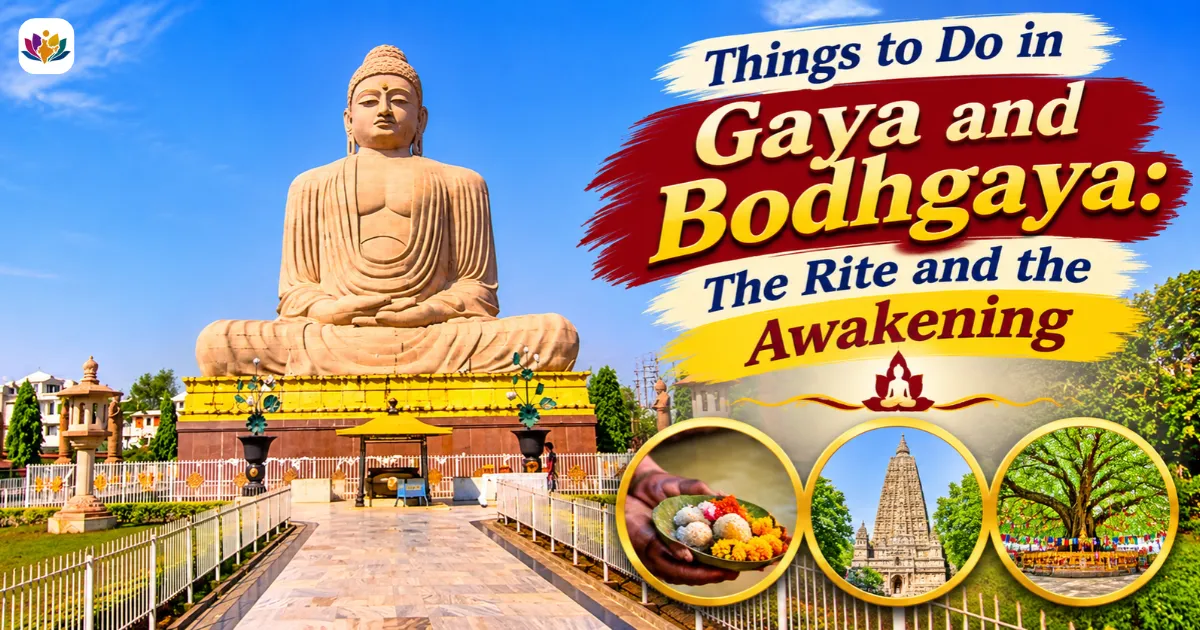
- The Great Buddha Statue: the 80-foot seated Buddha, inaugurated by the Dalai Lama, a short walk from the temple.
- The world monasteries: the Royal Bhutan, Thai, Japanese, Tibetan and Vietnamese temples, each in its own national style.
- Dungeshwari Cave Temples: about 12 km northeast, the hill caves of the Buddha's years of severe austerity.
- Sujata Garh: across the Niranjana river, the stupa marking where Sujata offered the Buddha milk-rice.
These sites are kept here as a plain guide, since they sit outside our main Kashi circuit; a car and a local guide help with the ones across the river.
Extend to the Buddhist Trail at Sarnath
Bodhgaya is where the Buddha was enlightened; Sarnath, near Varanasi, is where he gave his first sermon, so the two belong on one trail. If you are adding Kashi, keep half a day for the Buddhist sites there:
- Mulagandha Kuti Vihar - the temple with its frescoes of the Buddha's life.
- Sarnath Archaeological Museum - home to the Ashokan lion capital, India's emblem.
- Chaukhandi Stupa - the mound where the Buddha met his first disciples.
- Vishwa Shanti Stupa, Sarnath - the white peace pagoda at the deer park.
For the short hop near Kashi, see our guide to the drive from Varanasi to Sarnath.
Pair Bodhgaya With Kashi
Most pilgrims reach Bodhgaya by way of Kashi, which shares the railway line and holds the Ganga darshan. While you are there, keep time for the Kashi Vishwanath Temple, the evening Ganga Aarti at Dashashwamedh, a dawn boat ride on the Ganga and Manikarnika Ghat. Those with more days thread the whole north together, even travelling on from Varanasi to Ayodhya for Ram Lalla's darshan.
The Honest Bit
Let me be straight with you. The Mahabodhi Temple is profoundly moving, but it is a strict sacred place, not a casual sightseeing stop. The phone ban is real and firmly enforced, so do not expect to photograph your way around; leave the phone behind and simply be present. Queues build on festival days and in the winter season, the courtyard is open to the sun and the floor is bare underfoot. Come early, dress modestly, carry a little cash and your patience and give the seven sacred spots the slow, clockwise walk they deserve. Treated this way, Bodhgaya is one of the most peaceful places on earth.
Why Experience My India Is the Right Choice
I am Rajeev Sharma, born in Varanasi and guiding pilgrims for more than forty years across Bodhgaya, Sarnath, Kashi, Gaya and Ayodhya. For the Mahabodhi Temple we arrange a calm, early darshan, a guide for the seven sacred spots, a good stay near the temple and the wider Buddhist trail to Sarnath and Kashi if you wish. We handle the lockers, the tickets and the timings so your visit is unhurried. I speak Hindi, Telugu and Kannada, so South Indian families are at ease. With our Ayodhya Varanasi Tours team, the holiest place in Buddhism is taken care of.
| Tip from Rajeev Sharma: Reach the temple for the 5:30 am chanting, when the courtyard is cool and quiet and the Bodhi Tree is at its most beautiful. Leave your phone in the hotel safe so you are not turned back at the gate and carry only a little cash for the lockers and camera ticket. Walk the seven sacred spots slowly and clockwise, sit a while at the Vajrasana and stay for the kheer offering at ten. Keep the afternoon for the Great Buddha and the monasteries. Unhurried and phone-free, a Mahabodhi morning stays with you for life. |
Related Packages
- Kashi Buddha Trail, 6 days - Kashi, Sarnath and Bodhgaya together.
- Kashi Gaya Ayodhya tour package - the great tirthas in one journey.
- Gaya pind daan package - add the shraddha at nearby Gaya.
- Gaya pind daan moksha package - the fuller shraddha and moksha rite over more days.
- Complete circuit: Ayodhya, Prayagraj, Kashi & Bodhgaya, 10 days - the grand pilgrimage, Bodhgaya included.
Plan Your Bodhgaya Pilgrimage
Tell me your dates and your group size and I will arrange a calm darshan at the Mahabodhi Temple, a guide for the seven sacred spots, a good stay and the wider Buddhist trail to Sarnath and Kashi if you wish. Browse our Buddhist circuit package or call and WhatsApp +91 7302265809 and we will plan it together.
| Book Your Ayodhya - Varanasi Trip Today |
| 📞 +91-7302265809 |
| 💬 WhatsApp: +91-7302265809 |
| We Reply in 30 Minutes |
| Packages start from ₹1,999/ person | Rated 4.9★ |
| Explore all: Ayodhya Varanasi Tours |
| Jai Shri Hari 🙏 |